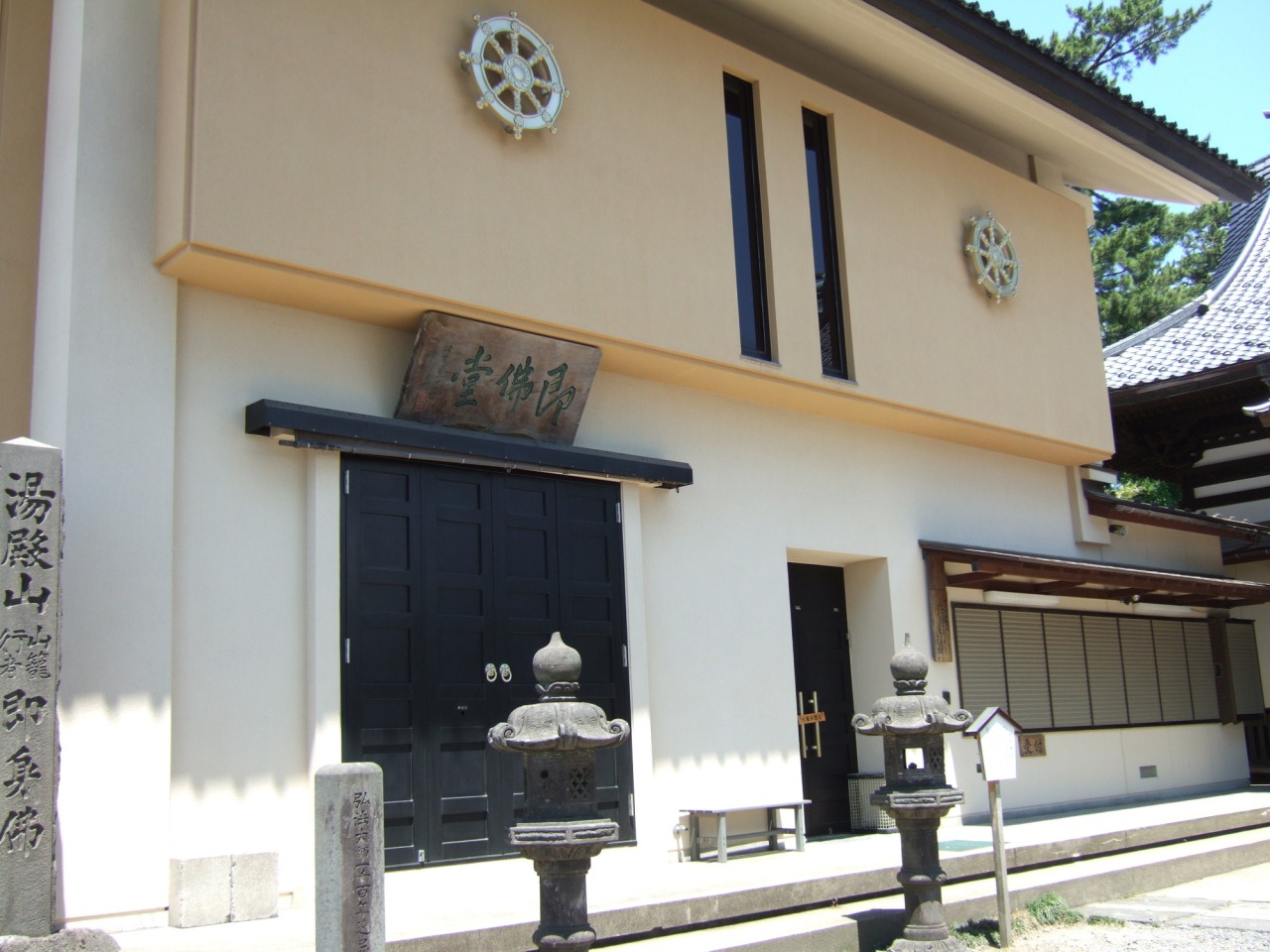
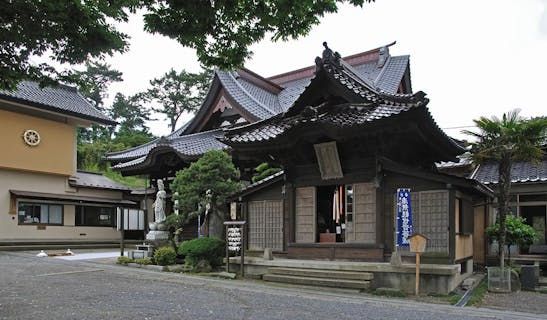
Kaikouji Temple is a temple located in Sakata City, Yamagata Prefecture, and there are six self-mummified monks in the Shonai region. Two of them are enshrined in the Jukubutsudo Hall at Kaikouji Temple. Interestingly, Kaikouji Temple is the only temple in the country that enshrines two self-mummified monks, making it a very rare existence nationwide. Self-mummified monks are Buddhist statues that are believed to remain in a state where their bodies do not decay even after death as a result of their training, and are objects of faith. At Kaikouji Temple, you can see these self-mummified monks. In addition, Kaikouji Temple is a temple of the Shingon sect, and it is said to have been founded by the founder, Kukai. From the fact that two self-mummified monks are enshrined in one temple and its historical background, Kaikouji Temple is widely known as a special existence!

English
1/3
Kaikou-ji
山形県
Temple where two "self-mummified" bodies are enshrined
This temple is said to have been opened by Kobo Daishi about 1200 years ago. It is the only temple in the country that enshrines two sokushinbutsu (self-mummified Buddhist monks). The temple displays the belongings of Tetsumonkaijōnin, who became a sokushinbutsu. When visiting the temple, be sure to convey your wishes to the monk.
Features & How to Enjoy
Highlights
Point 1
A Special Temple Where Two Self-Mummified Monks are Enshrined!
Point 2
Special Night Festival: Awashima Kannon Yakkai Ceremony
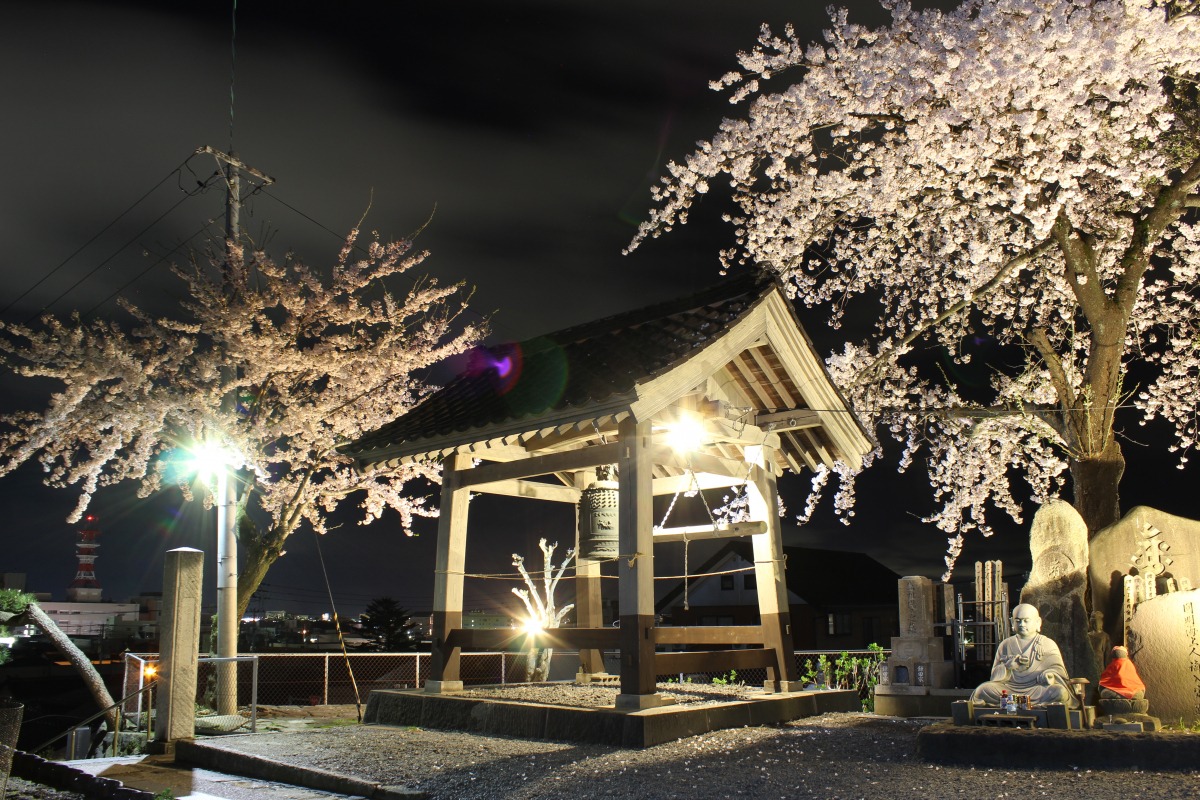
Every year from August 1st to 3rd, the Awashima Kannon Yakkai Ceremony is held at Kaikouji Temple. During this period, special rituals and festivals are held at night, and visitors can see the Sokushinbutsu even during the nighttime hours. The Awashima Kannon Yakkai Ceremony is an important event at Kaikouji Temple and has become an event that many people visit. The atmosphere of the nighttime festival is special, and the fantastic light and prayer atmosphere combine to give participants a sense of awe. During this period, events such as local festivals and fairs are also held, allowing you to enjoy the local culture and traditions. The Awashima Kannon Yakkai Ceremony provides a fascinating experience at Kaikouji Temple and leaves visitors with deep memories!
Point 3
Experience Sakata's Commercial Culture at Honma Family's Former Residence!
Near Kaikouji Temple, you can find the Honma Family's former residence. The Honma family has been conducting business in Sakata for generations, and their former residence is a historic building. Inside the building, you can see exhibits such as the ledger room used by the Honma family, lighting fixtures such as lanterns, kitchen utensils, and signs related to commerce. You can also see firefighting equipment that the Honma family prepared in case of the frequent fires in Sakata. The Honma Family's former residence is a place that conveys the appearance of a family that has walked with the region's history, and provides visitors with an opportunity to glimpse the local commercial culture and way of life!
Point 4
Symbol of the Shonai Region: Yamakura Warehouse

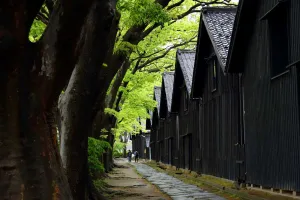
The Yamakura Warehouse is a symbol of the Shonai region. Built during the Meiji era, this warehouse was used to store rice. It consists of 12 white-walled, earthen storehouses with a capacity of up to 10,800 tons (180,000 koku) of rice. Behind the warehouse, there is a beautiful zelkova tree-lined street that changes its colors depending on the season, captivating visitors. The Yamakura Warehouse is an important presence that conveys the history and culture of the region's agriculture. In addition, the tourist facilities "Sakata Yume-no-Kura" and the Shonai Rice History Museum are located inside the warehouse, where you can enjoy local souvenirs and historical exhibits!
Point 5
Beautiful Hilltop with a View of Sakata City

Kaikou-ji Temple is located in Sakata City, Yamagata Prefecture, and is built on a beautiful hilltop with a view of Sakata City. From the temple grounds, you can see the city's scenery, which offers a particularly magnificent view. Additionally, from the temple grounds, you can also see the Dewa Sanzan (Mountains of Dewa), which are representative mountains of Yamagata Prefecture and an important object of faith. Being located on a hilltop, visitors to Kaikou-ji Temple can feel the grandeur of the Dewa Sanzan while enjoying the beautiful scenery of Sakata City. Due to these features, Kaikou-ji Temple is known as a scenic spot and is visited by many people.
Sightseeing

A Temple Located on a Hill Overlooking Sakata City!
Kaikouji Temple is a temple located on a hill overlooking Sakata City. Of the six sokushinbutsu (Buddhist mummies) in the Shonai region, two are enshrined in the Sokushinbutsudo Hall at the top of Mt. Sunadaka at Kaikouji Temple. This is the only temple in Japan where two sokushinbutsu are enshrined in one temple. It is said that Kaikouji Temple was founded about 1,200 years ago by Kukai, the founder of Shingon Buddhism. The purpose of the temple is to relieve the suffering of people until the end of the world and to fulfill their wishes. To achieve this, the monks Tadahama and Enmyo underwent 1,000 days of ascetic training and became sokushinbutsu. Their mummies are now enshrined in the Sokushinbutsudo Hall. Every year, a festival called "Ennichi" (night festival) is held at Kaikouji Temple from August 1st to 3rd. During this period, you can also visit the sokushinbutsu at night. Many people gather and the temple becomes lively as a place for worship and prayer. Kaikouji Temple is an important place of faith in the Shonai region and is worth visiting for its history and miraculous sokushinbutsu.
Access
Recommended Access by Car!
When accessing Kaikouji Temple by public transportation, it's about a 10-minute drive from JR Sakata Station. You can use a taxi or rental car from the station. If you're coming by car, it's about 7km or 20 minutes from Sakata IC on the Nihonkai Tohoku Expressway. The road from Sakata IC to Kaikouji Temple is relatively easy to access, and signs are also installed to guide you. With ample parking available, visiting by car is convenient.
Basic Information
| Address | 2-7-12 Hiyomachi, Sakata City, Yamagata Prefecture 998-0037 | ||
| TEL | 0234-22-4264 | ||
| Web Site | http://kaikouji-sakata.jimdo.com/ |
 Better Visit Together
Recommended Spots










 -
-
 -
-


Explore the City