AVA Travel's logo
English
日本語
English
中文繁體
Top PageList of SpotsTohokuYamagataYamagata, Zao, & TendoMt. Haguro Three Temples (Yamadera)
TOP
1/3
Show All Image

Mt. Haguro Three Temples (Yamadera)

山形県
4.5
Tourist Information of This Area
general.prefecture.
Matsuo Basho also visited the ancient temple in the sky
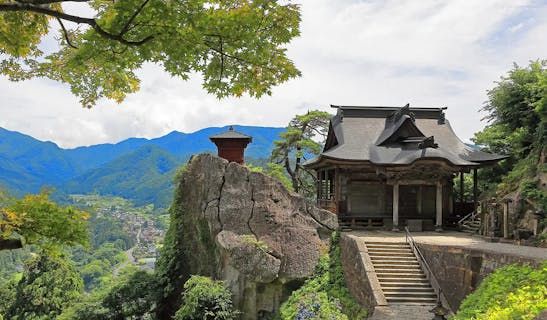
Also known as "Yamadera," Mt. Haguro Three Temples is a place of practice and faith throughout the entire mountain, and is also known for being the place where Matsuo Basho composed a famous haiku. The appearance of the temple floating in mid-air is beautiful, and it is a popular spot not only in Japan but also among foreign visitors.

Features & How to Enjoy

Classic HistoryView

Highlights

Point 1

Stunning Landscape of Unique Rock Formations!

Mt. Haguro Three Temples (Yamadera) Stunning Landscape of Unique Rock Formations!
Mount Takarajima Rokusho-ji Temple is known for its entire mountain of unique rock formations, and its landscape is renowned as a place of practice and faith. It takes about an hour to walk from the trailhead to the Okunoin, where the Great Buddha Hall is located, but during that time, a stunning view unfolds. The mountain is dotted with unique rocks and boulders, and the powerful natural beauty of their shapes can be felt. Moss and plants grow on the rock faces and in the crevices, giving the scenery a unique flavor. It is also known that Matsuo Basho wrote the famous haiku "silence / cicadas penetrate the rocks" during his travels in the travelogue "Oku no Hosomichi". The landscape of these unique rock formations evokes a sense of the mystery and tranquility of nature for visitors. The scenery of Mount Takarajima Rokusho-ji Temple, which has been highly valued as a place of mountain worship and practice, has become a special presence for those seeking purification and healing of the heart!
Point 2

Climb the 1,015 Steps of Intense Training!

Mt. Haguro Three Temples (Yamadera) Climb the 1,015 Steps of Intense Training!
At the Tachiseki Temple on Mount Houshu, there is a long staircase of 1,015 steps known as the traditional pilgrimage route. Climbing these steps to reach the inner sanctuary is considered part of the training for many believers and visitors. These 1,015 steps are considered a path for practitioners to detach themselves from worldly desires and achieve spiritual purification. By climbing the steps, one can strengthen their body, discipline their mind, and overcome their desires. Therefore, these steps are called the "auspicious steps of training." Along the way, there are various attractions such as monuments, historical sites, and breathtaking views, allowing visitors to enjoy the scenery while climbing. The surroundings of the steps are tranquil and majestic, providing a peaceful environment for spiritual training. Climbing the 1,015 steps may be a challenge, but it offers the opportunity to experience the magnificent view of the inner sanctuary and the joy of purifying one's mind. The staircase at Tachiseki Temple is a special spot for deepening one's faith, and is a valuable place for many people.
Point 3

The Root Main Hall, Made of the Oldest Known Beech Wood in Japan

Mt. Haguro Three Temples (Yamadera) The Root Main Hall, Made of the Oldest Known Beech Wood in Japan
The Root Main Hall of Hōjusan Risshaku-ji Temple is an important temple that serves as the main hall of the entire temple. The current Root Main Hall was rebuilt in 1356 by Kaneyori Sawai, the lord of Yamagata Castle, and is a five-by-four bay building with a hipped roof. The building is mainly made of beech wood and is considered the oldest known beech wood building in Japan. Inside the Root Main Hall, there is a wooden statue of Yakushi Nyorai, the Buddha of healing, enshrined as the main deity. It is said that this statue was made by the Buddhist monk Jikaku Daishi, and visitors can pay their respects to the statue at the Root Main Hall. In addition, other deities such as Nikkō Bosatsu, Gakkō Bosatsu, Jūnishi-ten, Monju Bosatsu, and Bishamon-ten are also enshrined as attendants. The Root Main Hall is not only a place of worship, but also a valuable cultural and architectural asset due to its historical and architectural significance. Its beautiful hipped roof and interior decorations such as statues and carvings are attractive to many people. The Root Main Hall of Hōjusan Risshaku-ji Temple is a precious cultural heritage site in Yamagata City and a place of peace and tranquility for visitors.
Point 4

Enjoy a Panoramic View of Yamadera's Scenery from Kaizando Hall!

Mt. Haguro Three Temples (Yamadera) Enjoy a Panoramic View of Yamadera's Scenery from Kaizando Hall!
Kaizando Hall at Hojusan Risshaku-ji Temple is the hall where Jikaku Daishi, who founded the temple, used to worship. It is built on top of Hyakujogai Cliff. Under the hall, there is a natural cave where Jikaku Daishi's remains are buried in a golden coffin. Inside the hall, there is a wooden statue of Jikaku Daishi, which is offered meals and incense twice a day. Normally, the hall is closed, but once a year, on January 14th, the anniversary of Jikaku Daishi's death, a memorial service is held and the hall is opened to the public. To the left of Kaizando Hall, there is a small red hall called Nokyo-do, where visitors can receive a stamp for their temple book and leave a copy of sutras they wrote. This is the oldest building on the mountain, and it houses a copy of the Lotus Sutra that was transcribed over four years at Okunoin. The building is designated as a cultural asset by the prefecture, and it underwent dismantling and repair work in 1987. Moreover, to the upper right of Kaizando Hall, there is Godaido Hall, where the Five Great Myo-o deities are enshrined. The hall is built like a stage, and visitors can enjoy a magnificent view of Yamadera's scenery. The area around Kaizando Hall at Hojusan Risshaku-ji Temple is filled with Jikaku Daishi's spiritual energy and history, and it has become a spiritual sanctuary for many people.
Point 5

The Inner Sanctuary where a 5m Amida Buddha Statue is Enshrined!

Mt. Haguro Three Temples (Yamadera) The Inner Sanctuary where a 5m Amida Buddha Statue is Enshrined!
The Inner Sanctuary, or Okunoin, of Takamatsuzan Tateshina Temple is located at the end of the approach and is commonly referred to as the Okunoin. Its formal name is "Nyohodo." The hall enshrines both Shaka Nyorai and Tahoto Nyorai, which are said to have been brought back from China by the priest Jikaku Daishi. The Nyohodo was used as Jikaku Daishi's dojo, and the one-character-three-bows calligraphy practice he started with graphite and a brush is carefully preserved. This practice is part of ascetic training, and believers perform the calligraphy with sincerity, hoping for purification of their hearts and the severing of bad karma. On the left side of the Nyohodo is the Daibutsuden, or Great Buddha Hall. Inside the hall, a 5m-tall golden Amida Buddha statue is enshrined, attracting many people from various sects who come to pay their respects. The statue exudes a solemn presence and has become a place to deepen one's faith. The Okunoin and Daibutsuden are the final destination of Tateshina Temple and an important place for those seeking to sever bad karma and purify their hearts. Many believers and pilgrims visit this sacred place, hoping for peace of mind and salvation.
See more

Sightseeing

Mt. Haguro Three Temples (Yamadera) A Temple where the Beauty of Nature and Spirituality Merge!
A Temple where the Beauty of Nature and Spirituality Merge!
Hojusan Tateshina Temple is known as a "mountain temple". The entire mountain, made up of strange rocks and boulders, is considered a place of practice and faith. The path from the entrance to the main hall of the temple, located in the inner sanctuary, offers a magnificent view. It's also known for the famous haiku poet, Matsuo Basho, who left the phrase "the voice of the cicada penetrates the rocks" in his travelogue "The Narrow Road to the Deep North". Tateshina Temple became the stage for Basho's poem, and the words inspired by the beautiful scenery still remain in the temple today. The route to visit Tateshina Temple is known for its long staircase of 1,015 steps, and it's common to climb towards the inner sanctuary. It's said that climbing these stairs will eliminate worldly desires, making it a precious place for spiritual training. However, in addition to spiritual training, there are many attractions along the way, such as haiku monuments, historical sites, and scenic viewpoints, making it enjoyable both intellectually and sensually. The courtyard of Hojusan Tateshina Temple is a place where the beauty of nature and spirituality merge, giving many people a sense of tranquility and inspiration!

Access

Access in 15 Minutes by Car from Yamagata Kita IC!
When accessing the Tateshina Temple on public transportation, you can arrive at the Yamadera trailhead after a 7-minute walk from JR Yamadera Station. The path from the station to the temple is relatively close, making it a convenient access point. If you are using a private car, you can arrive by taking National Route 13 via Yamagata Kita IC, which is about 8km away (takes about 15 minutes). It is also located about 14km away (takes about 18 minutes) from Yamagata Zao IC and about 18km away (takes about 20 minutes) from Sekisawa IC on the Yamagata Expressway.

Basic Information

Address 4456-1 Yamadera, Yamagata-shi, Yamagata 999-3301
Business Hours

N/A

TEL 023-695-2002
Web Site http://www.rissyakuji.jp/
Better Visit Together

Recommended Spots

松尾芭蕉の遺した作品を展示する記念館
山寺芭蕉記念館
山形県
3.6
Rainny dayCulture
四季折々の美しさを楽しめる広大な庭園!
御苦楽園
山形県
4
HistoryNature
観光拠点としてピッタリな温泉地!
ほほえみの空湯舟つるや
天童温泉
山形県
3.9
Onsen

Nearby Hotels

山形県
5
¥9,350~/person
山形県
3.4
¥3,250~/person
山形県
3.2
¥5,000~/person
Sakaeya Hotel
山形県
3.5
¥7,150~/person
Shouhakutei Azumaso
山形県
4.6
¥11,000~/person
山形県
4.2
¥5,510~/person
See more

Nearby Activities

【山形・山寺駅徒歩10分・手回しロクロ】芭蕉も詠んだ名勝・山寺の一角で陶芸体験!参道の階段をのぼってタイムスリップ!時間を忘れて作陶しよう
山形県
¥2,200~/人
【山形県・山形市・HADO】最先端ARスポーツ「HADO」をファミリーで体験!【ファミリープラン】
山形県
¥5,500~/人
【書き駒体験・山形】お気に入りの「一文字」を駒に!気軽で簡単、伝統工芸体験!
山形県
¥1,210~/人
【そば打ち体験・山形】高速山形北ICから約15分!観光ついでに打ちたてホヤホヤお蕎麦を堪能しよう!
山形県
¥1,650~/人
【山形県天童市・彫駒教室】世界に一つしかない自分の彫駒を作ろう!
山形県
¥1,870~/人
【山形・七宝焼き】一期一会の美しさに出会う時間。世界に1つだけの輝きを!七宝アクセサリー制作体験(1点)(カット銀箔法)
山形県
¥2,100~/人
See more

Nearby Restaurants

食べログ
ロングベアー
¥2,000~¥2,999
¥5,000~¥5,999
3.6
(Tabelog's review)
食べログ
手打蕎麦 きふね
~¥999
-
3.5
(Tabelog's review)
食べログ
RESTAURANT AKIYAMA
¥4,000~¥4,999
¥8,000~¥9,999
3.7
(Tabelog's review)
食べログ
楓庵
-
¥5,000~¥5,999
3.5
(Tabelog's review)
食べログ
佐藤屋
~¥999
-
3.2
(Tabelog's review)
食べログ
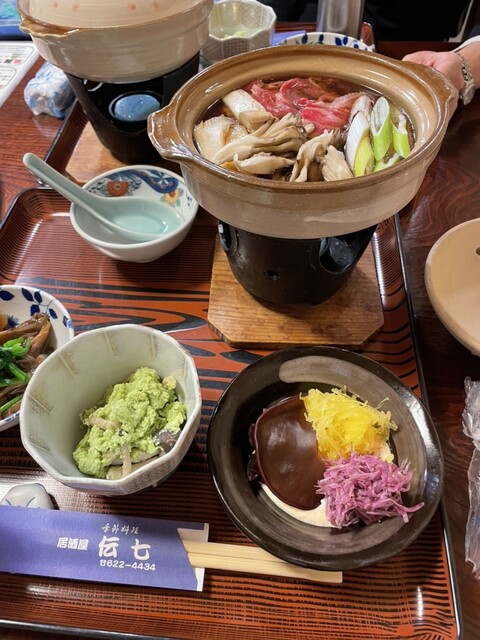
居酒屋 伝七
-
¥6,000~¥7,999
3.6
(Tabelog's review)
Explore the City
山形市・蔵王・天童
山形県
4.3
アプリアイコン AIでかんたん!旅行プランが作れる
App Storeでダウンロード Google Playでダウンロード
  • Terms of Use
  • Privacy Policy
  • Company Information
AVA Travel's logo
Login
Sign up
  • Hokkaido
  • Aomori
  • Akita
  • Iwate
  • Miyagi
  • Yamagata
  • Fukushima
  • Tochigi
  • Gunma
  • Ibaraki
  • Saitama
  • Kanagawa
  • Chiba
  • Tokyo
  • Yamanashi
  • Niigata
  • Nagano
  • Shizuoka
  • Aichi
  • Gifu
  • Mie
  • Ishikawa
  • Toyama
  • Fukui
  • Hyogo
  • Wakayama
  • Nara
  • Kyoto
  • Shiga
  • Osaka
  • Okayama
  • Hiroshima
  • Yamaguchi
  • Tottori
  • Shimane
  • Ehime
  • Kagawa
  • Kochi
  • Tokushima
  • Oita
  • Nagasaki
  • Fukuoka
  • Kumamoto
  • Miyazaki
  • Saga
  • Kagoshima
  • Okinawa
  • Sapporo
  • Otaru, Yoichi, & Niseko
  • Hakodate
  • Hirosaki
  • Towada & Okuinse
  • Aomori City Area
  • Tsugaru
  • Morioka
  • Miyagi Zao & Shiroishi
  • Sendai
  • Yamagata, Zao, & Tendo
  • Aizu & Kitakata
  • Utsunomiya
  • Nasu & Shiobara
  • Nikko & Kinugawa
  • Takasaki & Maebashi
  • Shibukawa & Ikaho
  • Kusatsu & Shiga Kogen
  • Oze & Numata
  • Tomioka & Shimonita
  • Kawagoe & Higashimatsuyama
  • Omiya, Urawa, & Kounosu
  • Chichibu & Nagatoro
  • Yokohama
  • Kamakura
  • Motomachi & Chinatown
  • Enoshima & Shonan
  • Hakone
  • Tateyama & Minamiboso
  • Kujukuri
  • Chiba, Urayasu, & Makuhari
  • Kisarazu & Kimitsu
  • Izu Islands & Ogasawara
  • Shibuya, Harajuku, & Omotesando
  • Shinjuku
  • Asakusa & Skytree
  • Lake Kawaguchi & Fujiyoshida
  • Yuzawa, Tsunan, & Tokamachi
  • Nagaoka, Sanjo, & Kashiwazaki
  • Karuizawa
  • Matsumoto, Kamikochi & Shiojiri
  • Nozawa Onsen & Shiga Kogen
  • Izu
  • Gotemba, Fuji & Fujinomiya
  • Atami
  • Nagoya
  • Gero (Gero Onsen)
  • Hida, Takayama, & Shirakawa-go
  • Ise, Shima, and Toba
  • Kanazawa
  • Kobe & Arima (Arima Onsen)
  • Awaji Island
  • Himeji & Ako
  • Nara, Tenri, & Horyuji
  • Uji
  • Gion & Higashiyama
  • Kyoto Station & Kawaramachi
  • Fushimi & Yamashina
  • Arashiyama & Takao
  • Nagahama & Maibara
  • Hikone & Omihachiman
  • Shinsaibashi, Namba, & Tennoji
  • Osaka Bay Area
  • Okayama, Ushimado, & Bizen
  • Kurashiki
  • Himeji
  • Miyajima & Hiroshima City
  • Takehara & Mihara
  • Onomichi
  • Shimonoseki & Sumijima
  • Izumo & Iwami Ginzan
  • Uwajima & Ozu
  • Imabari
  • Matsuyama & Dogo
  • Niihama, Saijo, & Mount Ishizuchi
  • Shimanami
  • Shimanto & Ashizuri
  • Oboke, Ohboke, & Iya Valley
  • Naruto & Tokushima City Area
  • Oita City, Saiki, & Usuki
  • Yufuin
  • Beppu
  • Iki, Tsushima & Goto Islands
  • Itoshima
  • Hakata, Tenjin & Dazaifu
  • Kitakyushu, Moji & Kokura
  • Aso & Kurokawa (Kurokawa Onsen)
  • Kumamoto, Yamaga & Kikuchi
  • Miyazaki, Miyakonojo, & Nichinan
  • Takachiho, Nobeoka, & Hyuga
  • Amami & Yoron
  • Yakushima
  • Ibusuki, Chiran & Makurazaki
  • Kagoshima, Sakurajima & Kirishima
  • Onna Village & Central Okinawa
  • Kumejima & Kerama
  • Miyakojima
  • Iriomote Island, Taketomi Island, & Kohama Island
  • Ishigaki Island
  • Naha & Southern Okinawa
  • Utoro Onsen
  • Tokachigawa Onsen
  • Jozankei Onsen
  • Toyako Onsen
  • Noboribetsu Onsen
  • Yukawa Onsen
  • Sukayu Onsen
  • Nyuto Onsen
  • Higashiyama Onsen
  • Shiobara Onsen
  • Kinugawa Onsen
  • Nikko Onsen
  • Yugawara Onsen
  • Hakoneyumoto Onsen
  • Owakudani Onsen
  • Gero Onsen
  • Nibukawa Onsen
  • Ureshino Onsen
  • Yufuin Onsen
  • Beppu Onsen
  • Kurokawa Onsen
  • Jigoku Onsen
  • Ibusuki Onsen

Copyright (c) AVA Intelligence Inc. All Rights Reserved.