AVA Travel's logo
English
日本語
English
中文繁體
Top PageList of SpotsTohokuIwateMoriokaIwate Bank (formerly Morioka Bank) Former Main Building
TOP
1/3
Show All Image

Iwate Bank (formerly Morioka Bank) Former Main Building

岩手県
4.2
Tourist Information of This Area
general.prefecture.
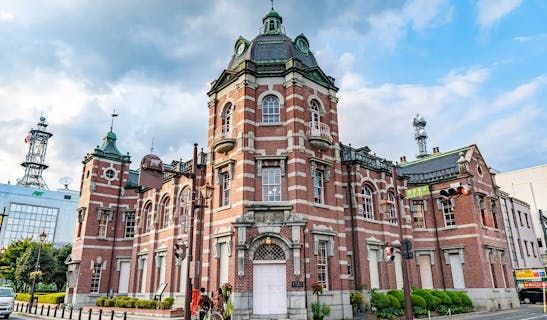
Morioka's symbol with prominent brickwork
The former Morioka Bank was designed by Kenji Tatsuno, the designer of Tokyo Station. It has been open to the public since 2016 and the interior is available for viewing. Many materials related to the bank are also on display. Experience the atmosphere of the Meiji to Taisho era through the bank's splendid decorations and interior!

Features & How to Enjoy

Classic TownscapeRainny day

Highlights

Point 1

Beautiful Appearance with Unique Red Brick Color

Iwate Bank (formerly Morioka Bank) Former Main Building Beautiful Appearance with Unique Red Brick Color
The former main building of the Morioka Bank, now the Iwate Bank, is a building constructed with beautiful red bricks, and its appearance exudes elegance. The unique color of the red bricks gives off a dignified air, as if transcending time, and evokes a sense of historical value. The entire building incorporates a sophisticated Renaissance-style design, exuding both a sense of weightiness and elegance. In particular, the sculptures and decorations applied to the details of the building are eye-catching, further enhancing the beauty of the architecture. The intricate patterns on the red brick walls create a sense of unity and style throughout the building. Just by looking at the appearance of the former main building of the Iwate Bank, you can experience the charm of historical architecture and immerse yourself in the world of beauty.
Point 2

A Space Adorned with Beautiful Decorations and Intricate Sculptures

Iwate Bank (formerly Morioka Bank) Former Main Building A Space Adorned with Beautiful Decorations and Intricate Sculptures
The interior of the former main branch of the Morioka Bank, now the Iwate Bank, is adorned with beautiful decorations and intricate sculptures. As soon as you step inside, you'll be surrounded by the artistic beauty of the luxurious ceiling decorations and the finely carved details on the walls. The ceiling features elegant patterns and frescoes, while the walls are adorned with delicate sculptures and reliefs. The sculptures and decorations incorporate designs inspired by plants and animals, as well as geometric patterns, and their intricate beauty is truly overwhelming. The interior decorations reflect the fusion of the building's history and art, and will surely leave a lasting impression on visitors. The interior of the former main branch of the Iwate Bank offers visitors a special experience, enchanting them with its beautiful space.
Point 3

The Former Head Office of the Morioka Bank (now Iwate Bank), Famous for its Red Brick Tokyo Station Building Designed by Kenji Tatsuno

Iwate Bank (formerly Morioka Bank) Former Main Building The Former Head Office of the Morioka Bank (now Iwate Bank), Famous for its Red Brick Tokyo Station Building Designed by Kenji Tatsuno
The former head office of the Morioka Bank (now Iwate Bank) is a work designed by the architectural giant Kenji Tatsuno. Tatsuno is also known for designing the red brick Tokyo Station building at the Marunouchi entrance. The former head office of the Morioka Bank is his only remaining architectural work in the Tohoku region. This building exemplifies Tatsuno's style, with unique design and excellent composition. In particular, the symbolic composition that takes advantage of the corner lot is stunning, giving the entire building a sense of weight and dignity. The exterior of the building, with its red brick appearance, is beautifully designed down to the smallest detail, with intricate carvings and decorations creating a rich space. The former head office of the Morioka Bank is one of Tatsuno's architectural works, praised for its excellent design and construction techniques. For visitors, it's a valuable opportunity to see Tatsuno's work up close, and for architecture enthusiasts and those interested in history and culture, it's a must-see building!
Point 4

Explore the Various Sights of the Interior Tour Zone!

The former main branch of the Morioka Bank, now the Iwate Bank, has various attractions. In the paid area, the Morioka Zone, important red brick facilities such as reception rooms, executive rooms, and conference rooms have been faithfully restored to their original state. The interior decoration, which gives a sense of the Meiji and Taisho eras, is characterized by beautiful wood grain and decoration. There is also a corner dedicated to the designers, Kin'go Tatsuno and Banji Kawai. On the second floor, you can watch a video introducing the history and structure of the Iwate Bank building in the virtual theater. The powerful reproduction video using virtual reality allows you to fully enjoy the charm of the red brick building. Throughout the year, various events such as photo exhibitions and concerts are held at the Iwate Bank Red Brick Building. In a retro atmosphere that is different from other event halls, you can enjoy art and culture. Check the official website for event information and don't miss out on the events worth visiting. Through the attractions of the Iwate Bank's former main branch, you can learn about the financial history and architectural charm of Iwate. Enjoy interesting exhibitions and events while feeling the beauty and charm of the historic building inside and out!
Point 5

Historically Valuable and Nature-Rich Morioka Castle Site Park!

Iwate Bank (formerly Morioka Bank) Former Main Building Historically Valuable and Nature-Rich Morioka Castle Site Park!
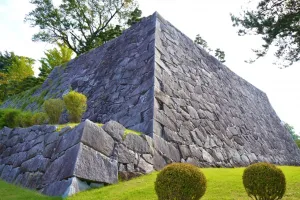
Morioka Castle Site Park is an attractive tourist spot that combines historical value with a beautiful natural environment. It spreads out on the site of the former Morioka Castle, and within the vast grounds, there are castle ruins and gardens. Within the park, you can see the remains of the castle, such as stone walls, turret platforms, and gates, and feel the footsteps of history. In the gardens, which offer beautiful views throughout the four seasons, you can enjoy cherry blossom viewing and autumn foliage. There are also exhibits and explanatory boards related to history within the park, making it an attractive place for those interested in history and culture. When visiting the former main branch of the Iwate Bank, why not also visit this park and feel the rich nature and history?
See more

Sightseeing

Iwate Bank (formerly Morioka Bank) Former Main Building A Renaissance-Style Red Brick Landmark!
A Renaissance-Style Red Brick Landmark!
The former main building of the Morioka Bank (now Iwate Bank) is a Renaissance-style red brick building located at the foot of Nakanohashi Bridge. Built in 1911 as the former Morioka Bank headquarters, it is now designated as an important cultural property by the government. The design of this building was handled by Tatsuno Kingo, known as the designer of Tokyo Station, and his disciple, Kasai Manji, who was born in Morioka. It is also known as the only architectural work that Tatsuno Kingo left in the Tohoku region. In August 2012, after the bank business closed, it was reborn as a public facility after about three and a half years of preservation and repair work. The beautiful appearance of the red brick and the unique Renaissance-style design have been loved by the local people as the "red brick bank". Currently, the former main building of the Iwate Bank is open to the public, and visitors can enjoy the beauty and dignity of the historic architecture. In addition, exhibition rooms and event spaces are also provided inside the building, and cultural events and exhibitions are held there. The former main building of the Iwate Bank is an important landmark in Morioka City and has become an attractive place for architecture enthusiasts and those interested in history and culture.

Access

Access in about 10 minutes by bus from JR Morioka Station!
When accessing the former main building of the Iwate Bank (formerly the Morioka Bank) by public transportation, take the Morioka city loop bus "Dendenmushi" counterclockwise from the JR Morioka Station bus terminal and get off at the Morioka Bus Center Nanakku-mae bus stop in about 10 minutes. It's about a 1-minute walk from the bus stop. If you're coming by car, take National Route 46 from the Tohoku Expressway Morioka IC and drive for about 25 minutes over a distance of about 7km. There are also parking lots in the area around the former main building of the Iwate Bank, making it convenient for those coming by car.

Basic Information

Address 1-2-20 Nakano Hashi-dori, Morioka-shi, Iwate 020-0871
Business Hours

Monday: 10:00-17:00, Tuesday: Closed, Wednesday: 10:00-17:00, Thursday: 10:00-17:00, Friday: 10:00-17:00, Saturday: 10:00-17:00, Sunday: 10:00-17:00

TEL 019-622-1236
Web Site https://www.iwagin-akarengakan.jp/
Better Visit Together

Recommended Spots

四季折々の花が咲き誇る盛岡城跡公園!
盛岡城跡公園
岩手県
4
History
朱塗りの大社殿が美しい神宮!
盛岡八幡宮
岩手県
4.3
History
盛岡の歴史と文化を学べる施設!
もりおか歴史文化館
岩手県
3.9
HistoryRainny dayCulture

Nearby Hotels

岩手県
4.3
¥3,250~/person
Kita Hotel
岩手県
4.1
¥2,900~/person
Sincère Morioka
岩手県
2.6
¥4,000~/person
岩手県
4
¥4,900~/person
岩手県
¥5,900~/person
Daiwa Roynet Hotel Morioka
岩手県
3.8
¥3,100~/person
See more

Nearby Activities

【岩手県盛岡市・陶芸体験】焼き上がりまで最短1日!本格的な陶芸を気軽に体験しよう!
岩手県
¥1,300~/人
【岩手県盛岡市・ペンダントトップ】個性を込めた手作りペンダント作りを体験
岩手県
¥500~/人
【岩手県盛岡市・陶芸体験】集中できる環境で、茶碗や湯のみサイズの作品をつくろう
岩手県
¥2,500~/人
【岩手県盛岡市・陶芸体験】心を鎮めて、手びねりで中鉢サイズの器をつくろう
岩手県
¥3,000~/人
【岩手県盛岡市・陶芸体験】自由に模様をアレンジしてずっと色褪せない器をつくろう!
岩手県
¥1,300~/人
【200円割引】喜盛の湯 クーポン(入浴料+アロマ岩盤浴+オロポ+貸しタオルセット)☆
岩手県
¥1,380~/人
See more

Nearby Restaurants

食べログ
ふかくさ
~¥999
-
3.2
(Tabelog's review)
食べログ
ウサギ ボタニカ
¥1,000~¥1,999
-
3.2
(Tabelog's review)
食べログ
茶廊車門
~¥999
-
3.4
(Tabelog's review)
食べログ
クラムボン
~¥999
-
3.3
(Tabelog's review)
食べログ
ティーハウス リーベ
~¥999
-
3.4
(Tabelog's review)
食べログ
おやさい食堂 カラコマ
¥1,000~¥1,999
-
3.1
(Tabelog's review)
Explore the City
盛岡
岩手県
4.1
アプリアイコン AIでかんたん!旅行プランが作れる
App Storeでダウンロード Google Playでダウンロード
  • Terms of Use
  • Privacy Policy
  • Company Information
AVA Travel's logo
Login
Sign up
  • Hokkaido
  • Aomori
  • Akita
  • Iwate
  • Miyagi
  • Yamagata
  • Fukushima
  • Tochigi
  • Gunma
  • Ibaraki
  • Saitama
  • Kanagawa
  • Chiba
  • Tokyo
  • Yamanashi
  • Niigata
  • Nagano
  • Shizuoka
  • Aichi
  • Gifu
  • Mie
  • Ishikawa
  • Toyama
  • Fukui
  • Hyogo
  • Wakayama
  • Nara
  • Kyoto
  • Shiga
  • Osaka
  • Okayama
  • Hiroshima
  • Yamaguchi
  • Tottori
  • Shimane
  • Ehime
  • Kagawa
  • Kochi
  • Tokushima
  • Oita
  • Nagasaki
  • Fukuoka
  • Kumamoto
  • Miyazaki
  • Saga
  • Kagoshima
  • Okinawa
  • Sapporo
  • Otaru, Yoichi, & Niseko
  • Hakodate
  • Hirosaki
  • Towada & Okuinse
  • Aomori City Area
  • Tsugaru
  • Morioka
  • Miyagi Zao & Shiroishi
  • Sendai
  • Yamagata, Zao, & Tendo
  • Aizu & Kitakata
  • Utsunomiya
  • Nasu & Shiobara
  • Nikko & Kinugawa
  • Takasaki & Maebashi
  • Shibukawa & Ikaho
  • Kusatsu & Shiga Kogen
  • Oze & Numata
  • Tomioka & Shimonita
  • Kawagoe & Higashimatsuyama
  • Omiya, Urawa, & Kounosu
  • Chichibu & Nagatoro
  • Yokohama
  • Kamakura
  • Motomachi & Chinatown
  • Enoshima & Shonan
  • Hakone
  • Tateyama & Minamiboso
  • Kujukuri
  • Chiba, Urayasu, & Makuhari
  • Kisarazu & Kimitsu
  • Izu Islands & Ogasawara
  • Shibuya, Harajuku, & Omotesando
  • Shinjuku
  • Asakusa & Skytree
  • Lake Kawaguchi & Fujiyoshida
  • Yuzawa, Tsunan, & Tokamachi
  • Nagaoka, Sanjo, & Kashiwazaki
  • Karuizawa
  • Matsumoto, Kamikochi & Shiojiri
  • Nozawa Onsen & Shiga Kogen
  • Izu
  • Gotemba, Fuji & Fujinomiya
  • Atami
  • Nagoya
  • Gero (Gero Onsen)
  • Hida, Takayama, & Shirakawa-go
  • Ise, Shima, and Toba
  • Kanazawa
  • Kobe & Arima (Arima Onsen)
  • Awaji Island
  • Himeji & Ako
  • Nara, Tenri, & Horyuji
  • Uji
  • Gion & Higashiyama
  • Kyoto Station & Kawaramachi
  • Fushimi & Yamashina
  • Arashiyama & Takao
  • Nagahama & Maibara
  • Hikone & Omihachiman
  • Shinsaibashi, Namba, & Tennoji
  • Osaka Bay Area
  • Okayama, Ushimado, & Bizen
  • Kurashiki
  • Himeji
  • Miyajima & Hiroshima City
  • Takehara & Mihara
  • Onomichi
  • Shimonoseki & Sumijima
  • Izumo & Iwami Ginzan
  • Uwajima & Ozu
  • Imabari
  • Matsuyama & Dogo
  • Niihama, Saijo, & Mount Ishizuchi
  • Shimanami
  • Shimanto & Ashizuri
  • Oboke, Ohboke, & Iya Valley
  • Naruto & Tokushima City Area
  • Oita City, Saiki, & Usuki
  • Yufuin
  • Beppu
  • Iki, Tsushima & Goto Islands
  • Itoshima
  • Hakata, Tenjin & Dazaifu
  • Kitakyushu, Moji & Kokura
  • Aso & Kurokawa (Kurokawa Onsen)
  • Kumamoto, Yamaga & Kikuchi
  • Miyazaki, Miyakonojo, & Nichinan
  • Takachiho, Nobeoka, & Hyuga
  • Amami & Yoron
  • Yakushima
  • Ibusuki, Chiran & Makurazaki
  • Kagoshima, Sakurajima & Kirishima
  • Onna Village & Central Okinawa
  • Kumejima & Kerama
  • Miyakojima
  • Iriomote Island, Taketomi Island, & Kohama Island
  • Ishigaki Island
  • Naha & Southern Okinawa
  • Utoro Onsen
  • Tokachigawa Onsen
  • Jozankei Onsen
  • Toyako Onsen
  • Noboribetsu Onsen
  • Yukawa Onsen
  • Sukayu Onsen
  • Nyuto Onsen
  • Higashiyama Onsen
  • Shiobara Onsen
  • Kinugawa Onsen
  • Nikko Onsen
  • Yugawara Onsen
  • Hakoneyumoto Onsen
  • Owakudani Onsen
  • Gero Onsen
  • Nibukawa Onsen
  • Ureshino Onsen
  • Yufuin Onsen
  • Beppu Onsen
  • Kurokawa Onsen
  • Jigoku Onsen
  • Ibusuki Onsen

Copyright (c) AVA Intelligence Inc. All Rights Reserved.