AVA Travel's logo
English
日本語
English
中文繁體
Top PageList of SpotsTohokuIwateHanamaki & TonoHachimoriyama
TOP
1/3
Show All Image

Hachimoriyama

岩手県
Tourist Information of This Area
general.prefecture.
A famous mountain of flowers where alpine plants bloom beautifully and elegantly.
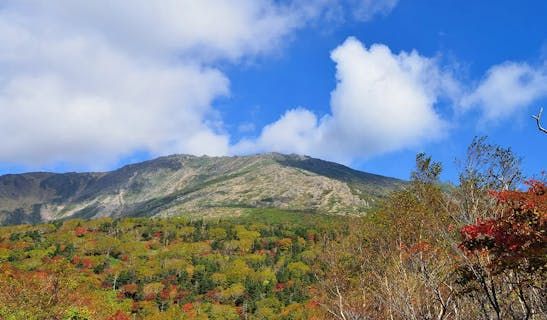
Hachimoriyama is one of Japan's 100 famous mountains. It is known as a treasure trove of alpine plants, with about 200 species of alpine plants, including the Hayachineusuyukisou, blooming in abundance. The climbing course is also well-maintained, and the view from the foot of the mountain is popular. The panoramic view from around the fifth station is also breathtaking.

Features & How to Enjoy

Classic ActivityViewNature

Highlights

Point 1

Experience the Representative Odatoge Course of Mt. Hayachine Climbing!

Hachimoriyama Experience the Representative Odatoge Course of Mt. Hayachine Climbing!
The Odatoge Course of Mt. Hayachine is one of the representative courses for climbing the mountain, with many rocky areas, steep slopes, and scenes where ladders are used. While progressing through the course, you will go through a mixed forest, but once you reach the forest limit, the view suddenly opens up and you can enjoy a magnificent view. Especially from the first station to the summit, you can enjoy a beautiful view with Mt. Yakushidake in the background. As you move forward on the Odatoge Course, the number of floating stones increases, so you need to be careful not only when climbing but also when descending. To climb safely, it's important to prepare proper climbing equipment, ensure physical fitness, and check the weather and road conditions. It's also recommended to climb with a guide or someone with climbing experience, especially on rocky areas and steep slopes. The Odatoge Course has challenging elements, but it's a course where you can fully enjoy the attractive scenery and charm of the mountain. Enjoy safe and enjoyable climbing while feeling the harshness and beauty of nature!
Point 2

Climb Mt. Keitokuyama and Nakadake on the Keitokuyama Course!

Hachimoriyama Climb Mt. Keitokuyama and Nakadake on the Keitokuyama Course!
The Keitokuyama Course on Mt. Hayachine follows the ridge that extends westward from the mountain and traverses two peaks, Nakadake and Keitokuyama. As there are many rocky areas and the course time is relatively long, sufficient preparation and physical strength are necessary. While walking along the ridge with a good view from Mt. Hayachine to Nakadake, caution is required as there are also rocky and dangerous areas. There is also the Nanakorogashi Falls, which can only be seen on this course, so it's worth a try. The Keitokuyama Course has some technical elements and may be difficult for beginners. It's important to have climbing experience and appropriate equipment. Also, please enjoy climbing while paying attention to changes in weather and meteorological conditions. On this course, you can experience the beauty and severity of nature at the same time. It's a recommended course for those seeking great views, waterfall viewing, and challenging climbing, but please prioritize safety and make sure to prepare well before attempting it!
Point 3

Stunning Views from the Summit!

Hachimoriyama Stunning Views from the Summit!
From the summit of Mt. Hayachine, you can enjoy stunning views. You can see Mt. Yakushidake and the hiking trail on the opposite side of the summit. Mt. Yakushidake shows a beautiful figure, and the hiking trail allows you to feel the grandeur of nature. You can also enjoy the view up to Mt. Tsurugidake. The area around the summit is a spacious space, and having lunch or taking a break while enjoying the great view is a special time. Meals eaten in nature will taste even more delicious. The view from the summit changes depending on the season, with fresh greenery in spring, lush greenery in summer, and autumn leaves in fall. The view from the summit can be seen as a reward for the effort of climbing. Let's be impressed by the grandeur of nature while enjoying breathtakingly beautiful views. However, the weather on the mountain can change quickly, so please prioritize safety when enjoying the summit!
Point 4

Lovely Alpine Plants Unique to Mt. Hayachine!

Hachimoriyama Lovely Alpine Plants Unique to Mt. Hayachine!
Mt. Hayachine is home to many beautiful alpine plants, but the most famous of them all is the Hayachine Usuyukisou. This plant can only be found in the high-altitude zone of Mt. Hayachine, and blooms with beautiful flowers similar to edelweiss. The best time to see them is around late July. There are also various other endemic species found on Mt. Hayachine, such as the Nambutouuchisou with its pale pink flowers, the perennial Nambutoranoo, and the Miyama Yamabukishouma, a variation of the yellow montane lily. These plants are unique to Mt. Hayachine and add to the charm of the mountainous terrain. The Himekozakura, which can only be found in the Kitakami Mountains, is also worth noting. This plant blooms with small white flowers and exudes a delicate beauty in the mountains. The alpine plants of Mt. Hayachine are like natural jewels and are an attractive element for climbers and nature lovers. If you can find these plants on the summit or along the mountain path, you will surely feel the richness and mystery of nature!
Point 5

Impressive Sight of Exposed Giant Rocks and Boulders!

Hachimoriyama Impressive Sight of Exposed Giant Rocks and Boulders!
Mt. Hayachine is known for the giant rocks and boulders that are exposed all over the mountain's surface. Especially when passing through the forest, giant rocks appear from the first station, allowing you to truly feel that Mt. Hayachine is a peak of rocks. These giant rocks and boulders were formed by weathering and erosion over a long period of time. They were exposed due to the undulation of the mountain and crustal movement, and their powerful appearance is an impressive sight for climbers. There are also climbing scenes where you can climb through the gaps between giant rocks or on rocky surfaces, which add to the excitement of climbing. Furthermore, these giant rocks and boulders contribute greatly to the landscape of Mt. Hayachine. The view from the summit and the scenery seen through the gaps between rocks allow you to feel the power and beauty of the rocks at the same time. These natural formations add to the unique charm of Mt. Hayachine and will surely be a memorable experience for climbers.
See more

Sightseeing

Hachimoriyama Mt. Hayachine: The Highest Peak in the Kitakami Mountain Range at 1,917 Meters
Mt. Hayachine: The Highest Peak in the Kitakami Mountain Range at 1,917 Meters
Mt. Hayachine is the highest peak in the Kitakami Mountain Range, standing at 1,917 meters tall. The mountain is covered in huge rocks and boulders, and beautiful alpine plants that have survived the harsh natural environment thrive in between. There are three climbing courses on Mt. Hayachine, but the most common ones are the Kawarano-bo and Odakoshi courses. Although these courses have steep slopes, even beginners can reach the summit in about three hours. The mountain is known as a treasure trove of alpine plants, and the autumn foliage in the forest zone is also beautiful. The foothills of Mt. Hayachine are covered in serpentinite, and the brilliant autumn foliage that can be seen there is breathtakingly beautiful. The panoramic view from around the fifth station is particularly stunning. Mt. Hayachine was designated as a national park in 1982, and its rich natural environment and scenery continue to attract many people. For mountain climbers and nature observers, Mt. Hayachine is a must-see destination. A fascinating mountain climbing experience awaits as you aim for the summit while feeling the breath and beauty of nature.

Access

Access in about an hour by car from Hanamaki IC!
To access Mt. Hayachine, if using public transportation, first head to JR Shinkanamachi Station. From there, take a bus bound for Kawarano-bo and get off at the Odakoshi bus stop. It takes about 1 hour and 20 minutes, and the bus stop is Odakoshi. From the Odakoshi bus stop, it takes about 2 hours and 30 minutes on foot to reach Mt. Hayachine. If using a car, take National Route 4 and 396 via Hanamaki IC on the Tohoku Expressway to reach Mt. Hayachine. It takes about 1 hour. However, access to Mt. Hayachine is limited in some areas due to narrow roads, especially during the winter when traffic restrictions may be imposed due to snow and ice. Be sure to check road information and weather conditions in advance and try to access it safely.

Basic Information

Address 3-2, Etsunagi 5-chome, Miyako-shi, Iwate 028-2421, Japan
TEL 0193-78-2116
Web Site https://genkisha.com/sansou/
Better Visit Together

Recommended Spots

宮沢賢治が愛した美しい滝!
又一滝
岩手県
4.4
Nature
早池峰山の南麓に広がる自然豊かな高原!
荒川高原
岩手県
4.3
Nature
遠野の伝統や文化を伝承する伝承園!
伝承園
岩手県
3.9
HistoryCulture

Nearby Hotels

Takamuro Suikoen
岩手県
4.1
¥5,500~/person
B&B Kuranoya
岩手県
5
¥6,300~/person
Hotel Kikuyu
岩手県
4.2
¥3,520~/person
Aeria Tohno
岩手県
3.8
¥5,700~/person
岩手県
4.7
¥4,500~/person
岩手県
5
¥7,700~/person
See more

Nearby Activities

【岩手・田瀬湖・カヤック】小学1年生から体験可能!2人乗りカヤック体験
岩手県
¥6,600~/人
【岩手県・浄土ヶ浜・シーカヤック】奇岩の迫力を間近で体感!シーカヤックでジオ体験
岩手県
¥5,500~/人
【岩手・盛岡・岩洞湖・SUP体験ツアー】初心者歓迎!SUPに乗って水上散歩を楽しもう!
岩手県
¥7,000~/人
【岩手・盛岡・吹きガラス】作る・使う愉しみを感じよう!吹きガラス体験
岩手県
¥3,200~/人
【200円割引】喜盛の湯 クーポン(入浴料+アロマ岩盤浴+オロポ+貸しタオルセット)☆
岩手県
¥1,380~/人
【200円割引】喜盛の湯 クーポン(入浴料+アロマ岩盤浴+貸しタオルセット)
岩手県
¥1,080~/人
See more

Nearby Restaurants

食べログ
紙風船 とぴあ店
~¥999
-
3.1
(Tabelog's review)
食べログ
京屋亭
~¥999
~¥999
3.1
(Tabelog's review)
食べログ
とおのごはん
¥1,000~¥1,999
-
3.2
(Tabelog's review)
食べログ
よねたや
~¥999
-
3.2
(Tabelog's review)
早坂高原白樺荘
-
-
0
(Tabelog's review)
食べログ
岩洞湖レストハウス
¥1,000~¥1,999
-
3.3
(Tabelog's review)
Explore the City
花巻・遠野
岩手県
3.9
アプリアイコン AIでかんたん!旅行プランが作れる
App Storeでダウンロード Google Playでダウンロード
  • Terms of Use
  • Privacy Policy
  • Company Information
AVA Travel's logo
Login
Sign up
  • Hokkaido
  • Aomori
  • Akita
  • Iwate
  • Miyagi
  • Yamagata
  • Fukushima
  • Tochigi
  • Gunma
  • Ibaraki
  • Saitama
  • Kanagawa
  • Chiba
  • Tokyo
  • Yamanashi
  • Niigata
  • Nagano
  • Shizuoka
  • Aichi
  • Gifu
  • Mie
  • Ishikawa
  • Toyama
  • Fukui
  • Hyogo
  • Wakayama
  • Nara
  • Kyoto
  • Shiga
  • Osaka
  • Okayama
  • Hiroshima
  • Yamaguchi
  • Tottori
  • Shimane
  • Ehime
  • Kagawa
  • Kochi
  • Tokushima
  • Oita
  • Nagasaki
  • Fukuoka
  • Kumamoto
  • Miyazaki
  • Saga
  • Kagoshima
  • Okinawa
  • Sapporo
  • Otaru, Yoichi, & Niseko
  • Hakodate
  • Hirosaki
  • Towada & Okuinse
  • Aomori City Area
  • Tsugaru
  • Morioka
  • Miyagi Zao & Shiroishi
  • Sendai
  • Yamagata, Zao, & Tendo
  • Aizu & Kitakata
  • Utsunomiya
  • Nasu & Shiobara
  • Nikko & Kinugawa
  • Takasaki & Maebashi
  • Shibukawa & Ikaho
  • Kusatsu & Shiga Kogen
  • Oze & Numata
  • Tomioka & Shimonita
  • Kawagoe & Higashimatsuyama
  • Omiya, Urawa, & Kounosu
  • Chichibu & Nagatoro
  • Yokohama
  • Kamakura
  • Motomachi & Chinatown
  • Enoshima & Shonan
  • Hakone
  • Tateyama & Minamiboso
  • Kujukuri
  • Chiba, Urayasu, & Makuhari
  • Kisarazu & Kimitsu
  • Izu Islands & Ogasawara
  • Shibuya, Harajuku, & Omotesando
  • Shinjuku
  • Asakusa & Skytree
  • Lake Kawaguchi & Fujiyoshida
  • Yuzawa, Tsunan, & Tokamachi
  • Nagaoka, Sanjo, & Kashiwazaki
  • Karuizawa
  • Matsumoto, Kamikochi & Shiojiri
  • Nozawa Onsen & Shiga Kogen
  • Izu
  • Gotemba, Fuji & Fujinomiya
  • Atami
  • Nagoya
  • Gero (Gero Onsen)
  • Hida, Takayama, & Shirakawa-go
  • Ise, Shima, and Toba
  • Kanazawa
  • Kobe & Arima (Arima Onsen)
  • Awaji Island
  • Himeji & Ako
  • Nara, Tenri, & Horyuji
  • Uji
  • Gion & Higashiyama
  • Kyoto Station & Kawaramachi
  • Fushimi & Yamashina
  • Arashiyama & Takao
  • Nagahama & Maibara
  • Hikone & Omihachiman
  • Shinsaibashi, Namba, & Tennoji
  • Osaka Bay Area
  • Okayama, Ushimado, & Bizen
  • Kurashiki
  • Himeji
  • Miyajima & Hiroshima City
  • Takehara & Mihara
  • Onomichi
  • Shimonoseki & Sumijima
  • Izumo & Iwami Ginzan
  • Uwajima & Ozu
  • Imabari
  • Matsuyama & Dogo
  • Niihama, Saijo, & Mount Ishizuchi
  • Shimanami
  • Shimanto & Ashizuri
  • Oboke, Ohboke, & Iya Valley
  • Naruto & Tokushima City Area
  • Oita City, Saiki, & Usuki
  • Yufuin
  • Beppu
  • Iki, Tsushima & Goto Islands
  • Itoshima
  • Hakata, Tenjin & Dazaifu
  • Kitakyushu, Moji & Kokura
  • Aso & Kurokawa (Kurokawa Onsen)
  • Kumamoto, Yamaga & Kikuchi
  • Miyazaki, Miyakonojo, & Nichinan
  • Takachiho, Nobeoka, & Hyuga
  • Amami & Yoron
  • Yakushima
  • Ibusuki, Chiran & Makurazaki
  • Kagoshima, Sakurajima & Kirishima
  • Onna Village & Central Okinawa
  • Kumejima & Kerama
  • Miyakojima
  • Iriomote Island, Taketomi Island, & Kohama Island
  • Ishigaki Island
  • Naha & Southern Okinawa
  • Utoro Onsen
  • Tokachigawa Onsen
  • Jozankei Onsen
  • Toyako Onsen
  • Noboribetsu Onsen
  • Yukawa Onsen
  • Sukayu Onsen
  • Nyuto Onsen
  • Higashiyama Onsen
  • Shiobara Onsen
  • Kinugawa Onsen
  • Nikko Onsen
  • Yugawara Onsen
  • Hakoneyumoto Onsen
  • Owakudani Onsen
  • Gero Onsen
  • Nibukawa Onsen
  • Ureshino Onsen
  • Yufuin Onsen
  • Beppu Onsen
  • Kurokawa Onsen
  • Jigoku Onsen
  • Ibusuki Onsen

Copyright (c) AVA Intelligence Inc. All Rights Reserved.