AVA Travel's logo
English
日本語
English
中文繁體
Top PageList of SpotsKansaiWakayamaShirahama, Nachikatsuura, & KushimotoKumano Nachi Taisha
TOP
1/3
Show All Image

Kumano Nachi Taisha

和歌山県
4.5
Tourist Information of This Area
general.prefecture.
Kumano Sanzan Shrine, one of the three sacred mountains of Kumano, is enshrined with nature.
The deity enshrined at Nachi Taisha, "Kumano Fusumi no Okami," is a great deity with a spiritual power that creates all life. It is known as a shrine that connects various wishes. It's worth climbing the long stone steps while catching your breath.

Features & How to Enjoy

Classic History

Highlights

Point 1

Experience the Mysterious Nature and History of Kumano Nachi Taisha

Experience the Mysterious Nature and History of Kumano Nachi Taisha
Kumano Nachi Taisha is a shrine located in Nachikatsuura, Wakayama Prefecture, known as one of the Kumano Sanzan shrines. Within the grounds, there are famous cherry blossom trees such as the "Hidehira Sakura" yamazakura, shidarezakura, and yaesakura, which bloom beautifully in the spring. The natural scenery, including Nachi Falls, is also charming. It is the starting point of the Kumano Kodo, a mysterious area where history and nature worship coexist.
Point 2

Items that Bring Protection and Blessings

Kumano Nachi Taisha Items that Bring Protection and Blessings
画像引用:熊野那智大社公式
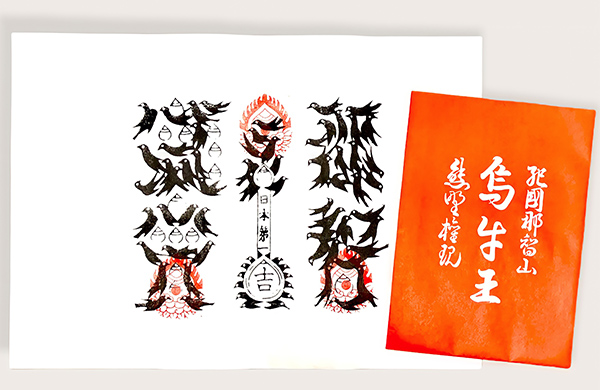
At Kumano Nachi Taisha, special items are offered as gifts. These items are carefully made by the priests with great care and have been worshipped for a long time. For example, the "Ushiwaka-Ōjinja Charm" is a talisman that is carefully made one by one by rubbing ink with water from the Nachi Falls. It is enshrined in each household as a charm against evil, and was also used as a pledge paper in the Middle Ages. The "Enmei Suimori (Separate Shrine)" contains water from the Nachi Falls and is prayed for good health and longevity. This amulet is offered at the separate shrine of Kumano Nachi Taisha, the Taki-jinja Shrine. These special gifts are appreciated by those who seek protection and blessings and deepen their faith. You can also receive them as a precious memory or expression of gratitude when you visit Kumano Nachi Taisha.
Point 3

Take a Walk on the Kumano Kodo Trail

Kumano Nachi Taisha Take a Walk on the Kumano Kodo Trail
Kumano Nachi Taisha is known as the starting point of the Kumano Kodo trail. The Kumano Kodo is a path that runs along the mountainside of the Kii Peninsula and is registered as a World Heritage Site as a historic pilgrimage route. Walking the Kumano Kodo allows you to experience the nature and history of the trail, providing a mystical experience. Additionally, you can stay at accommodations along the way, allowing you to walk the Kumano Kodo at your own pace. Come and have an unforgettable experience on the Kumano Kodo trail!
Point 4

Get a Close-up View of Nachi Falls

Kumano Nachi Taisha Get a Close-up View of Nachi Falls
From Kumano Nachi Taisha, you can see Nachi Falls. Nachi Falls is one of Japan's three famous waterfalls, with a drop of 133 meters, the highest in Japan for a single waterfall. The area around Nachi Falls has been designated as a special area of the Yoshino-Kumano National Park, and the surrounding mountains have been selected as a natural monument of Japan as the Nachi Primeval Forest. Nachi Falls, where you can enjoy the magnificent beauty of nature, is sure to impress visitors. Especially on New Year's Eve, when it is illuminated, Nachi Falls is a fantastic sight to behold.
Point 5

Seasonal and Attractive Events

Kumano Nachi Taisha Seasonal and Attractive Events
画像引用:熊野那智大社公式
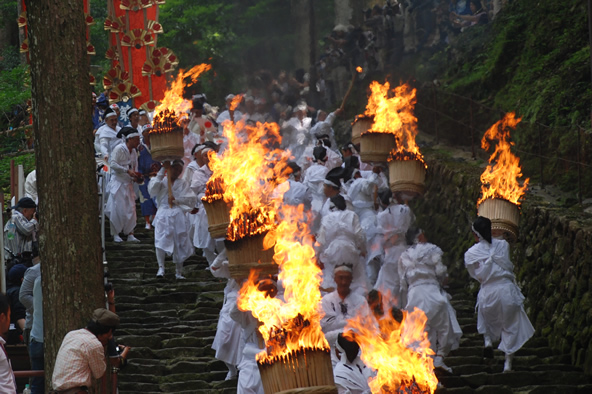
At Kumano Nachi Taisha Shrine, various attractive festivals and events are held each season. These events are a great opportunity to experience the local faith and culture. In spring, the "Cherry Blossom Festival" is held when the cherry blossoms are in full bloom. The approach and precincts are enveloped in beautiful cherry blossoms, and traditional events such as historical Shinto rituals and Kagura dances are held. In summer, the "Nachi no Ogi Matsuri" is held, attracting many visitors. The main event, the Ogi Fire Procession, creates a powerful and lively atmosphere. The festivals and events at Kumano Nachi Taisha Shrine are loved by locals and tourists alike as seasonal traditions. By participating in these events, you can experience rich culture and traditions.
Point 6

Attractive Surrounding Spots

Kumano Nachi Taisha Attractive Surrounding Spots
In addition to the shrine, there are many recommended spots to enjoy around Kumano Nachi Taisha. Near Nachi Falls, there are observation decks where you can see the waterfall basin and areas where you can draw a fortune slip using the waterfall's water. In addition, at the surrounding cafes and restaurants, you can enjoy dishes made with local ingredients while admiring the beautiful view of Nachi Falls. When visiting Nachi Taisha, be sure to also explore the surrounding tourist spots for an even more enjoyable experience.
Point 7

The Blessings of Kumano Nachi Taisha

The Blessings of Kumano Nachi Taisha
Kumano Nachi Taisha has long been revered as a place where people's relationships are tied together by the divine virtues of Kumano Fusumi Daijin, and is known as the "Yui Shrine". Its blessings extend beyond just relationships, possessing the power to fulfill various wishes. Nachi Falls is an important presence for those who respect nature and pray for longevity and safety. Additionally, due to the legend of the Yatagarasu, it is also worshipped as a guiding god that protects transportation and maritime safety. Furthermore, the Nagi tree, which is the sacred tree of Kumano Nachi Taisha, is revered as a symbol of safety and security. Filled with the blessings of Kumano's nature and gods, Kumano Nachi Taisha is a place of comfort for many people. For those seeking the blessings of tied relationships and divine grace, it is a special place worth visiting.
See more

Access

Access Information and Convenient Parking Available
Access to Kumano Nachi Taisha can be easily done by both public transportation and car. If using public transportation, the nearest station is Kii-Katsuura Station on the JR Kisei Main Line. From there, take the Kumano Mie Bus to the "Nachisan" bus stop, which takes about 30 minutes. If traveling by car from Osaka, take National Route 168 and National Route 42 to Nachikatsuura Town. The journey takes about 5 hours. There is also a route that passes through the Hanwa Expressway and the Kisei Expressway, and if you take National Route 42 from the Susami-Minami Interchange, you can arrive in Nachikatsuura Town in about 4 hours. From Nagoya, take the Tomei Expressway, Ise Expressway, Kisei Expressway, and enter National Route 42 via the Kumano Owase Road and the Kumano Otsu Interchange to head to Nachikatsuura Town. The journey takes about 4 hours. From Nachikatsuura Town, it takes about 20 minutes to reach the waterfall. At Nachi Falls, there is a shrine parking lot with up to 30 parking spaces available. A toll of 800 yen is required for the shrine disaster prevention road, but it is a convenient option for elderly people and families with children as it is accessible by car.

History

The History of Kumano Nachi Taisha Shrine
Kumano Nachi Taisha Shrine has its origins in the eastern expedition of the god Kamuyamato Iwarebiko no Mikoto. In 662 BC, Kamuyamato Iwarebiko no Mikoto and his entourage landed at Tanabe Bay (now Nachi Beach). They found a shining mountain and headed towards it. There, they found Nachi Falls and enshrined it as the divine body of the god Oonamuchi no Kami. Guided by the Yatagarasu, Kamuyamato Iwarebiko no Mikoto and his entourage safely arrived in the land of Yamato in Kashihara in February 660 BC and ascended to the throne as Emperor Jimmu. The Yatagarasu returned to Kumano after completing its mission and is said to be resting as a crow stone. Afterwards, the gods of Kumano descended on Mount Mitsumine and were enshrined in the Nachi Honmiya Shrine. However, in the fifth year of Emperor Nintoku's reign (317 AD), a shrine was built on the mountainside and the gods of Kumano and the god of Nachi Falls were relocated there. This is considered the beginning of Kumano Nachi Taisha Shrine. At the Hiryu Shrine, a separate shrine of Kumano Nachi Taisha, Nachi Falls is enshrined as the divine body. Its history dates back to the eastern expedition of Kamuyamato Iwarebiko no Mikoto and has gathered faith for a long time with the gods of Kumano.
Basic Information

Address 1 Nachisan, Nachikatsuura-cho, Higashimuro-gun, Wakayama 649-5301
Business Hours

N/A

TEL 0735-55-0321
Web Site http://www.kumanonachitaisha.or.jp/
Better Visit Together

Recommended Spots

日本三大瀑布の一つ
那智の滝
和歌山県
4.5
ViewNature
たくさんのパンダに会える!
アドベンチャーワールド
和歌山県
4.5
LeisureKids
関西屈指の美しさのビーチ
白良浜
和歌山県
4.4
ActivityBeach and riverNature
日本三大古湯の一つ
白浜温泉
和歌山県
4.1
Onsen
美味しい和歌山のマグログルメ
食べログ
竹原
3.5
(Tabelog's review)

Nearby Hotels

和歌山県
4.8
¥6,500~/person
Pal’S Inn Katsuura
和歌山県
3
¥4,850~/person
Sunrise Katsuura
和歌山県
3.7
¥5,500~/person
Minshuku Koide
和歌山県
3.8
¥3,300~/person
Minshuku Kamenoi
和歌山県
3.6
¥2,750~/person
KAMENOI HOTEL NACHI KATSUURA
和歌山県
3.9
¥8,200~/person
See more

Nearby Activities

【和歌山県・着物レンタル・3時間】平安衣装に身を包んで体験!貸衣装でゆっくり散策
和歌山県
¥4,500~/人
【和歌山県・着物レンタル・2時間】貸衣装で平安時代を体験!いにしえを味わえる散策プラン
和歌山県
¥3,000~/人
【和歌山・熊野古道・トレッキング】日本三大古道・大門坂コース(50分)
和歌山県
¥3,000~/人
【和歌山・熊野古道・トレッキング】日本三大古道・大門坂~那智の滝コース(3時間)
和歌山県
¥5,000~/人
【和歌山・熊野古道・トレッキング】補陀落山寺+大門坂~那智の滝コース(約5時間)
和歌山県
¥10,000~/人
【和歌山・熊野古道・トレッキング】上級者にオススメ!大雲取り越えコース(6時間)
和歌山県
¥18,000~/人
See more

Nearby Restaurants

食べログ
見晴亭
~¥999
-
3.3
(Tabelog's review)
食べログ
那智山観光センター
~¥999
-
3.2
(Tabelog's review)
食べログ
和か屋 本店
~¥999
~¥999
3.5
(Tabelog's review)
食べログ
美山亭
~¥999
-
3.3
(Tabelog's review)
食べログ
滝つせ
~¥999
-
3.2
(Tabelog's review)
食べログ
那智ねぼけ堂
¥1,000~¥1,999
-
3.5
(Tabelog's review)
Explore the City
白浜・那智勝浦・串本
和歌山県
4.4
アプリアイコン AIでかんたん!旅行プランが作れる
App Storeでダウンロード Google Playでダウンロード
  • Terms of Use
  • Privacy Policy
  • Company Information
AVA Travel's logo
Login
Sign up
  • Hokkaido
  • Aomori
  • Akita
  • Iwate
  • Miyagi
  • Yamagata
  • Fukushima
  • Tochigi
  • Gunma
  • Ibaraki
  • Saitama
  • Kanagawa
  • Chiba
  • Tokyo
  • Yamanashi
  • Niigata
  • Nagano
  • Shizuoka
  • Aichi
  • Gifu
  • Mie
  • Ishikawa
  • Toyama
  • Fukui
  • Hyogo
  • Wakayama
  • Nara
  • Kyoto
  • Shiga
  • Osaka
  • Okayama
  • Hiroshima
  • Yamaguchi
  • Tottori
  • Shimane
  • Ehime
  • Kagawa
  • Kochi
  • Tokushima
  • Oita
  • Nagasaki
  • Fukuoka
  • Kumamoto
  • Miyazaki
  • Saga
  • Kagoshima
  • Okinawa
  • Sapporo
  • Otaru, Yoichi, & Niseko
  • Hakodate
  • Hirosaki
  • Towada & Okuinse
  • Aomori City Area
  • Tsugaru
  • Morioka
  • Miyagi Zao & Shiroishi
  • Sendai
  • Yamagata, Zao, & Tendo
  • Aizu & Kitakata
  • Utsunomiya
  • Nasu & Shiobara
  • Nikko & Kinugawa
  • Takasaki & Maebashi
  • Shibukawa & Ikaho
  • Kusatsu & Shiga Kogen
  • Oze & Numata
  • Tomioka & Shimonita
  • Kawagoe & Higashimatsuyama
  • Omiya, Urawa, & Kounosu
  • Chichibu & Nagatoro
  • Yokohama
  • Kamakura
  • Motomachi & Chinatown
  • Enoshima & Shonan
  • Hakone
  • Tateyama & Minamiboso
  • Kujukuri
  • Chiba, Urayasu, & Makuhari
  • Kisarazu & Kimitsu
  • Izu Islands & Ogasawara
  • Shibuya, Harajuku, & Omotesando
  • Shinjuku
  • Asakusa & Skytree
  • Lake Kawaguchi & Fujiyoshida
  • Yuzawa, Tsunan, & Tokamachi
  • Nagaoka, Sanjo, & Kashiwazaki
  • Karuizawa
  • Matsumoto, Kamikochi & Shiojiri
  • Nozawa Onsen & Shiga Kogen
  • Izu
  • Gotemba, Fuji & Fujinomiya
  • Atami
  • Nagoya
  • Gero (Gero Onsen)
  • Hida, Takayama, & Shirakawa-go
  • Ise, Shima, and Toba
  • Kanazawa
  • Kobe & Arima (Arima Onsen)
  • Awaji Island
  • Himeji & Ako
  • Nara, Tenri, & Horyuji
  • Uji
  • Gion & Higashiyama
  • Kyoto Station & Kawaramachi
  • Fushimi & Yamashina
  • Arashiyama & Takao
  • Nagahama & Maibara
  • Hikone & Omihachiman
  • Shinsaibashi, Namba, & Tennoji
  • Osaka Bay Area
  • Okayama, Ushimado, & Bizen
  • Kurashiki
  • Himeji
  • Miyajima & Hiroshima City
  • Takehara & Mihara
  • Onomichi
  • Shimonoseki & Sumijima
  • Izumo & Iwami Ginzan
  • Uwajima & Ozu
  • Imabari
  • Matsuyama & Dogo
  • Niihama, Saijo, & Mount Ishizuchi
  • Shimanami
  • Shimanto & Ashizuri
  • Oboke, Ohboke, & Iya Valley
  • Naruto & Tokushima City Area
  • Oita City, Saiki, & Usuki
  • Yufuin
  • Beppu
  • Iki, Tsushima & Goto Islands
  • Itoshima
  • Hakata, Tenjin & Dazaifu
  • Kitakyushu, Moji & Kokura
  • Aso & Kurokawa (Kurokawa Onsen)
  • Kumamoto, Yamaga & Kikuchi
  • Miyazaki, Miyakonojo, & Nichinan
  • Takachiho, Nobeoka, & Hyuga
  • Amami & Yoron
  • Yakushima
  • Ibusuki, Chiran & Makurazaki
  • Kagoshima, Sakurajima & Kirishima
  • Onna Village & Central Okinawa
  • Kumejima & Kerama
  • Miyakojima
  • Iriomote Island, Taketomi Island, & Kohama Island
  • Ishigaki Island
  • Naha & Southern Okinawa
  • Utoro Onsen
  • Tokachigawa Onsen
  • Jozankei Onsen
  • Toyako Onsen
  • Noboribetsu Onsen
  • Yukawa Onsen
  • Sukayu Onsen
  • Nyuto Onsen
  • Higashiyama Onsen
  • Shiobara Onsen
  • Kinugawa Onsen
  • Nikko Onsen
  • Yugawara Onsen
  • Hakoneyumoto Onsen
  • Owakudani Onsen
  • Gero Onsen
  • Nibukawa Onsen
  • Ureshino Onsen
  • Yufuin Onsen
  • Beppu Onsen
  • Kurokawa Onsen
  • Jigoku Onsen
  • Ibusuki Onsen

Copyright (c) AVA Intelligence Inc. All Rights Reserved.