AVA Travel's logo
English
日本語
English
中文繁體
Top PageList of SpotsTohokuIwateKitakami & EsashiMichinoku Folk Village
TOP
1/3
Show All Image

Michinoku Folk Village

岩手県
4.2
Tourist Information of This Area
general.prefecture.
Preserved outdoor museum of Taisho-era architecture
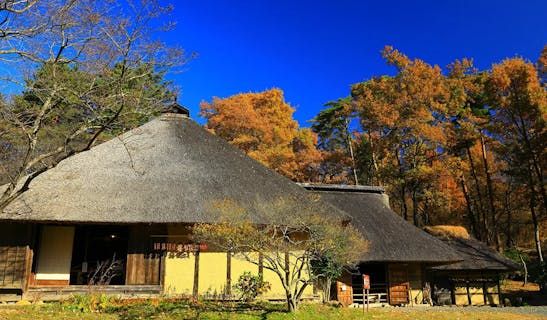
An outdoor museum that has relocated and restored thatched-roofed houses from the area around the Kitakami River. In addition to the thatched-roofed houses, the site also has facilities such as a museum that uses the former Kurosawa-jiri High School building and a tea house. You can enjoy the scenery of the four seasons while being wrapped in a nostalgic atmosphere.

Features & How to Enjoy

Classic HistoryCulture

Highlights

Point 1

10 Thatched-Roof Houses that have been Relocated!

Michinoku Folk Village 10 Thatched-Roof Houses that have been Relocated!
MICHINOKU FOLKLORE VILLAGE has 10 thatched-roof houses that have been relocated to the site. These houses can be entered, not just admired from the outside, allowing visitors to feel closer to the lifestyle of the time. Thatched-roof houses are a symbol of the way people lived in the past, with their unique shape and structure. Once inside the building, visitors can see nostalgic spaces such as fireplaces, hearths, earthen floors, and tatami mats. Furniture and household items are also on display, allowing visitors to recall what life was like back then. Thatched-roof houses can be enjoyed not only by looking at them, but also by touching them. Visitors can open and close doors and sliding screens, and sit on tatami mats, allowing them to physically experience the lifestyle of ancient people. The thatched-roof houses at MICHINOKU FOLKLORE VILLAGE exude a rich and charming atmosphere, along with their historical value. For visitors, it will be a valuable opportunity to experience the lifestyle of the past!
Point 2

A Museum Exhibiting Valuable Folklore Materials!

Michinoku Folk Village A Museum Exhibiting Valuable Folklore Materials!
The Michinoku Folklore Village's Folklore Museum is located in the former Kurosawajiri Girls' High School building. This building has a Western-style Taisho architecture and exhibits many valuable folklore materials. The museum is divided into two themes: "Work" and "Life". The exhibits include various folklore-related items such as ethnic costumes, tools, agricultural implements, and furniture. Through these exhibits, you can catch a glimpse of the work and lifestyle of people in the past. The exhibits are impressive and interesting for visitors. The Folklore Museum introduces the history and culture of the region and also plays a role in conveying traditions and customs. Please visit the Michinoku Folklore Village's Folklore Museum and see the valuable folklore materials on display. From there, you can touch on the lifestyle and culture of people in the past and feel the rich history of the region!
Point 3

Enjoy the Changing Natural Scenery with Each Season!

Michinoku Folk Village Enjoy the Changing Natural Scenery with Each Season!
The surrounding area of Michinoku Folk Village is surrounded by a rich natural environment. The vast 7-hectare site not only includes buildings, but also various trees and flowers that create beautiful scenery. The changing seasons are vividly felt and attract visitors. In spring, cherry blossoms bloom and beautiful pink petals color the grounds. In summer, the lush trees bring a cool breeze, and in autumn, the autumn leaves add beautiful colors. In winter, the snowy landscape spreads and a quiet atmosphere drifts. By strolling through the grounds, you can enjoy the changing natural scenery with each season. Spending relaxing time in nature can help you feel refreshed both mentally and physically. The natural environment surrounding Michinoku Folk Village provides visitors with a peaceful feeling and pleasant scenery. Please visit and enjoy the beauty of nature!
Point 4

Former Sugano Family Residence, a Designated Important Cultural Property!

Michinoku Folk Village Former Sugano Family Residence, a Designated Important Cultural Property!
The Former Sugano Family Residence, located in Michinoku Folk Village, is one of the oldest known traditional houses in Iwate Prefecture. This building was evaluated as a typical traditional house in Iwate Prefecture and was designated as a National Important Cultural Property in 1965 (Showa 40). The Former Sugano Family Residence is a thatched-roof house built in the late Edo period, and is a valuable existence that conveys the style and construction technology of the time. The interior of the building retains the unique layout and structure of traditional houses, allowing visitors to catch a glimpse of what life was like back then. This traditional house not only has historical and cultural value, but also plays an important role in conveying the traditions and climate of the region. Visitors can experience the beauty of traditional architecture and lifestyle by visiting the Former Sugano Family Residence. Among the traditional houses in Iwate Prefecture, the Former Sugano Family Residence in Michinoku Folk Village has particularly high historical value and is protected and preserved as an Important Cultural Property. Through its construction period and features, visitors can touch upon the history and culture of the region and feel the scenery of the good old days.
Point 5

Famous Cherry Blossom Viewing Spot: Kitakami Municipal Park Takamatsu!

Michinoku Folk Village Famous Cherry Blossom Viewing Spot: Kitakami Municipal Park Takamatsu!
Kitakami Municipal Park Takamatsu is a park located on the banks of the Kitakami River, where you can enjoy beautiful natural surroundings. It is particularly famous as a cherry blossom viewing spot, with stunning cherry blossoms blooming in full glory in the spring. It has been selected as one of the top 100 cherry blossom viewing spots and one of the three major cherry blossom viewing spots in the Tohoku region. The park is filled with rich trees and landscapes, allowing you to enjoy beautiful scenery throughout the four seasons, including cherry blossoms and azaleas in the spring, hydrangeas in early summer, and autumn leaves in the fall. As you stroll through the park, you will discover new charms and attractions. The "Kitakami Takamatsu" harmonizes nature, history, and culture, providing visitors with a pleasant time and a rich experience. We recommend visiting the Michinoku Folk Village as a set when you visit.
See more

Sightseeing

Michinoku Folk Village A Premier Open-Air Museum Featuring Reconstructed Thatched-Roof Houses!
A Premier Open-Air Museum Featuring Reconstructed Thatched-Roof Houses!
Michinoku Folk Village is one of the premier open-air museums in Tohoku, featuring reconstructed thatched-roof houses from the Kitakami River basin and surrounding areas. The approximately 7-hectare site, set amidst beautiful mountains, is dotted with 28 buildings, including 10 thatched-roof houses, such as the southern-style curved house, and 18 buildings, such as the former Kurosawa-Jiri Girls' High School, which retains the charm of Taisho-era architecture. Inside the former Kurosawa-Jiri Girls' High School building, many folk materials are also on display. At Michinoku Folk Village, you can learn about the way of life in the past amidst a nostalgic landscape and touch the seasonal flowers. The buildings, such as the thatched-roof houses and school buildings, recreate the scenery and way of life of the time, giving visitors a sense of the atmosphere of a bygone era. By taking a stroll, you can not only experience traditional culture and life in the past, but also enjoy the beauty of nature in every season. Michinoku Folk Village is a place where you can recall the past in a relaxed space and spend a peaceful moment.

Access

Access by Taxi or Rental Car from JR Kitakami Station
To access Michinoku Folk Village using public transportation, first head to JR Kitakami Station. It's about a 10-minute drive from JR Kitakami Station to Michinoku Folk Village. You can use a taxi or rental car, or it takes about 40 minutes on foot. If you're coming by car, take National Route 107 via the Kitakami-Ezuko Interchange on the Tohoku Expressway and you'll arrive at Michinoku Folk Village in about 13 minutes, covering approximately 6 km. Parking is also available, making it convenient to visit by car.

Basic Information

Address 62-3 Tachimachi-aza, Kitakami, Iwate 024-0043, Japan
Business Hours

Monday: 9:00am-5:00pm, Tuesday: 9:00am-5:00pm, Wednesday: 9:00am-5:00pm, Thursday: 9:00am-5:00pm, Friday: 9:00am-5:00pm, Saturday: 9:00am-5:00pm, Sunday: 9:00am-5:00pm

TEL 0197-72-5067
Web Site http://michinoku-fv.net/
Better Visit Together

Recommended Spots

東北有数の桜の名所として有名な都市公園!
北上市立公園展勝地
岩手県
4.1
Cherry blossomNature
利根山光人の作品を鑑賞できる博物館!
利根山光人記念美術館
岩手県
3.7
Rainny dayCulture
平安時代の建物を再現した歴史テーマパーク
歴史公園えさし藤原の郷
岩手県
3.9
ActivityLeisureAutumn leavesCherry blossomKidsHistory

Nearby Hotels

Hotel City Plaza Kitakami
岩手県
3.7
¥1,326~/person
Comfort Hotel Kitakami
岩手県
3.7
¥4,750~/person
Toyoko Inn Kitakami Station Shinkan Line
岩手県
3.6
¥4,050~/person
JR-EAST HOTEL METS KITAKAMI
岩手県
3.7
¥4,000~/person
Nanbu Hotel
岩手県
3.5
¥3,500~/person
GreenHotel Kitakami
岩手県
3.6
¥4,000~/person
See more

Nearby Activities

【岩手・夏油高原・SUP】神秘的なエメラルドグリーンの湖を探訪!秘境SUPツアー
岩手県
¥6,600~/人
【岩手・花巻・カヌー】ゆったりと美しい自然を感じよう!カヌー&ボート体験!初心者でも安心♪(180分)
岩手県
¥4,500~/人
【岩手・北上川・ワカサギ釣り】冬の風物詩を満喫!北川上でワカサギ釣りをしよう!
岩手県
¥3,000~/人
【岩手・花巻・スノーモービル】手軽にスリル感を味わおう!雪原ならではの乗り物、スノーモービルに挑戦!
岩手県
¥8,500~/人
【岩手・花巻・ラフティング】広大な北上川をツーリング!花巻の自然を満喫しよう!
岩手県
¥5,500~/人
【岩手・北上川・バギー】大自然を風になって感じよう!バギー・ミニバイク疾走プラン
岩手県
¥8,500~/人
See more

Nearby Restaurants

食べログ
隠家 北上店
-
¥3,000~¥3,999
3
(Tabelog's review)
食べログ
和食処 湧水
~¥999
¥1,000~¥1,999
3.2
(Tabelog's review)
食べログ
じん兵え
-
¥4,000~¥4,999
3.3
(Tabelog's review)
食べログ
菊寿し
-
¥4,000~¥4,999
3.1
(Tabelog's review)
にんたまラーメン 金ヶ崎店
~¥999
¥1,000~¥1,999
3
(Tabelog's review)
食べログ
くいもんや くら丸
-
-
3
(Tabelog's review)
Explore the City
北上・江刺
岩手県
4
アプリアイコン AIでかんたん!旅行プランが作れる
App Storeでダウンロード Google Playでダウンロード
  • Terms of Use
  • Privacy Policy
  • Company Information
AVA Travel's logo
Login
Sign up
  • Hokkaido
  • Aomori
  • Akita
  • Iwate
  • Miyagi
  • Yamagata
  • Fukushima
  • Tochigi
  • Gunma
  • Ibaraki
  • Saitama
  • Kanagawa
  • Chiba
  • Tokyo
  • Yamanashi
  • Niigata
  • Nagano
  • Shizuoka
  • Aichi
  • Gifu
  • Mie
  • Ishikawa
  • Toyama
  • Fukui
  • Hyogo
  • Wakayama
  • Nara
  • Kyoto
  • Shiga
  • Osaka
  • Okayama
  • Hiroshima
  • Yamaguchi
  • Tottori
  • Shimane
  • Ehime
  • Kagawa
  • Kochi
  • Tokushima
  • Oita
  • Nagasaki
  • Fukuoka
  • Kumamoto
  • Miyazaki
  • Saga
  • Kagoshima
  • Okinawa
  • Sapporo
  • Otaru, Yoichi, & Niseko
  • Hakodate
  • Hirosaki
  • Towada & Okuinse
  • Aomori City Area
  • Tsugaru
  • Morioka
  • Miyagi Zao & Shiroishi
  • Sendai
  • Yamagata, Zao, & Tendo
  • Aizu & Kitakata
  • Utsunomiya
  • Nasu & Shiobara
  • Nikko & Kinugawa
  • Takasaki & Maebashi
  • Shibukawa & Ikaho
  • Kusatsu & Shiga Kogen
  • Oze & Numata
  • Tomioka & Shimonita
  • Kawagoe & Higashimatsuyama
  • Omiya, Urawa, & Kounosu
  • Chichibu & Nagatoro
  • Yokohama
  • Kamakura
  • Motomachi & Chinatown
  • Enoshima & Shonan
  • Hakone
  • Tateyama & Minamiboso
  • Kujukuri
  • Chiba, Urayasu, & Makuhari
  • Kisarazu & Kimitsu
  • Izu Islands & Ogasawara
  • Shibuya, Harajuku, & Omotesando
  • Shinjuku
  • Asakusa & Skytree
  • Lake Kawaguchi & Fujiyoshida
  • Yuzawa, Tsunan, & Tokamachi
  • Nagaoka, Sanjo, & Kashiwazaki
  • Karuizawa
  • Matsumoto, Kamikochi & Shiojiri
  • Nozawa Onsen & Shiga Kogen
  • Izu
  • Gotemba, Fuji & Fujinomiya
  • Atami
  • Nagoya
  • Gero (Gero Onsen)
  • Hida, Takayama, & Shirakawa-go
  • Ise, Shima, and Toba
  • Kanazawa
  • Kobe & Arima (Arima Onsen)
  • Awaji Island
  • Himeji & Ako
  • Nara, Tenri, & Horyuji
  • Uji
  • Gion & Higashiyama
  • Kyoto Station & Kawaramachi
  • Fushimi & Yamashina
  • Arashiyama & Takao
  • Nagahama & Maibara
  • Hikone & Omihachiman
  • Shinsaibashi, Namba, & Tennoji
  • Osaka Bay Area
  • Okayama, Ushimado, & Bizen
  • Kurashiki
  • Himeji
  • Miyajima & Hiroshima City
  • Takehara & Mihara
  • Onomichi
  • Shimonoseki & Sumijima
  • Izumo & Iwami Ginzan
  • Uwajima & Ozu
  • Imabari
  • Matsuyama & Dogo
  • Niihama, Saijo, & Mount Ishizuchi
  • Shimanami
  • Shimanto & Ashizuri
  • Oboke, Ohboke, & Iya Valley
  • Naruto & Tokushima City Area
  • Oita City, Saiki, & Usuki
  • Yufuin
  • Beppu
  • Iki, Tsushima & Goto Islands
  • Itoshima
  • Hakata, Tenjin & Dazaifu
  • Kitakyushu, Moji & Kokura
  • Aso & Kurokawa (Kurokawa Onsen)
  • Kumamoto, Yamaga & Kikuchi
  • Miyazaki, Miyakonojo, & Nichinan
  • Takachiho, Nobeoka, & Hyuga
  • Amami & Yoron
  • Yakushima
  • Ibusuki, Chiran & Makurazaki
  • Kagoshima, Sakurajima & Kirishima
  • Onna Village & Central Okinawa
  • Kumejima & Kerama
  • Miyakojima
  • Iriomote Island, Taketomi Island, & Kohama Island
  • Ishigaki Island
  • Naha & Southern Okinawa
  • Utoro Onsen
  • Tokachigawa Onsen
  • Jozankei Onsen
  • Toyako Onsen
  • Noboribetsu Onsen
  • Yukawa Onsen
  • Sukayu Onsen
  • Nyuto Onsen
  • Higashiyama Onsen
  • Shiobara Onsen
  • Kinugawa Onsen
  • Nikko Onsen
  • Yugawara Onsen
  • Hakoneyumoto Onsen
  • Owakudani Onsen
  • Gero Onsen
  • Nibukawa Onsen
  • Ureshino Onsen
  • Yufuin Onsen
  • Beppu Onsen
  • Kurokawa Onsen
  • Jigoku Onsen
  • Ibusuki Onsen

Copyright (c) AVA Intelligence Inc. All Rights Reserved.