AVA Travel's logo
English
日本語
English
中文繁體
Top PageList of SpotsKantoTokyoFuchu & ChofuJindai Botanical Gardens
TOP
1/3
Show All Image

Jindai Botanical Gardens

東京都
4.2
Tourist Information of This Area
general.prefecture.
A park where you can enjoy flowers and plants for all seasons.
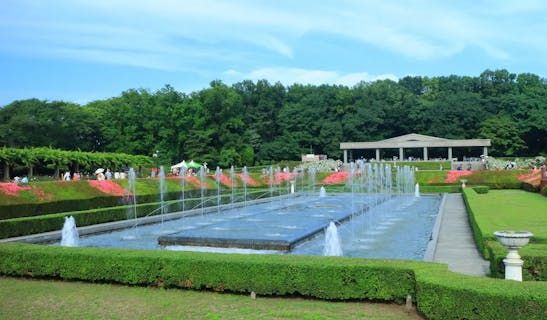
Established in 1961 as the only botanical garden in Tokyo, the Jindai Botanical Gardens is a vast park consisting of three areas, including a rose garden and a plum garden. In addition, there is a large greenhouse and a shop selling plants, so visitors can enjoy everything from plant viewing to shopping.

Features & How to Enjoy

Classic Nature

Highlights

Point 1

World-renowned, the Spring and Autumn Roses are a Must-See

Jindai Botanical Gardens World-renowned, the Spring and Autumn Roses are a Must-See
The rose garden at Jindai Botanical Park, which has won the "World Federation of Rose Societies Award for Garden Excellence," is a must-see. The roses are in full bloom twice a year, in spring and autumn, with about 400 species and 5,200 plants in the spring and about 300 varieties and 5,000 plants in the autumn, creating a graceful landscape. There are three areas where you can see roses: the "Main Garden," which is symmetrically arranged like a European garden, the "Wild Species and Old Rose Garden," which is modeled after the rose garden at Tokyo Metropolitan High School of Agriculture and Forestry, and the "International Rose Competition Flower Bed," where roses are cultivated for competition prototypes. Since you will be walking over a wide area, it is recommended that you wear comfortable clothes. Every year, a Rose Festival is held to coincide with the peak season in spring and autumn. There are plenty of events, such as early morning opening when the scent of roses is strong, concerts surrounded by the scent of roses, and the sale of rose-flavored soft serve ice cream at the cafe terrace.
Point 2

Encounter Approximately 1,300 Varieties of Plants in the Large Greenhouse

Jindai Botanical Gardens Encounter Approximately 1,300 Varieties of Plants in the Large Greenhouse
The large greenhouse is a place where you can admire approximately 1,300 varieties of plants. It is divided into rooms such as the tropical flower room, the tropical water lily room, and the begonia room. In addition, there is a corner featuring Chilean plants that was established in partnership with the "Viña del Mar Botanical Garden" in Chile, and a plant exhibition of the Ogasawara Islands, a world natural heritage site located on an island in Tokyo. You can encounter a diverse range of rare plants. As it is indoors, it is safe even on rainy days.
Point 3

One of the Symbols: Enjoy the Azalea Colony!

Jindai Botanical Gardens One of the Symbols: Enjoy the Azalea Colony!
The large azalea colony spreading around the pond near the main gate is one of the symbols of the park. From early March to early May, about 12,000 plants of 275 varieties bloom together. There are various colors, such as the Mitsuba azalea with purple petals that stands out even from afar, the Kure-no-yuki with small, pure white double-petaled flowers, and the Ooyama azalea that grows naturally in the mountains of Kanto and shows off large pink flowers. The scene reflected in the pond is also magnificent, and you can enjoy a unique and large-scale azalea colony.
Point 4

Enjoy a Variety of Cherry Blossoms in Spring

Jindai Botanical Gardens Enjoy a Variety of Cherry Blossoms in Spring
The Jindai Botanical Gardens, also known as a famous cherry blossom viewing spot. In the "Sakura Garden" area, there are more than 10 types of cherry blossoms, including rare varieties such as winter cherry blossoms that bloom from October to mid-April, in addition to the best viewing period from early March to late April. In areas other than the Sakura Garden, there are also about 600 Satoyama cherry trees planted throughout the park, which are quite impressive. Even the Somei Yoshino cherry trees near the entrance to the rose garden bloom beautifully, so during the cherry blossom viewing season, you can enjoy viewing many cherry blossoms just by strolling around the park.
Point 5

A Must-See: Sub-Parks Reproducing the Natural Environment of Tokyo

Jindai Botanical Gardens A Must-See: Sub-Parks Reproducing the Natural Environment of Tokyo
The "Plant Diversity Center" is a sub-park of the Jindai Botanical Garden. It's located just a short walk from the main entrance and admission is free. In the three areas of the Okutama Zone, Musashino Zone, and Izu Islands Zone, you can observe wild plants in environments that reproduce various areas. The Okutama Zone allows you to observe plants unique to the limestone ground that has risen to the surface due to uplift, while the Musashino Zone has maintained a balanced ecosystem with human life, including satoyama with hillsides. Exhibits specializing in the natural environment of Tokyo are abundant. The center also plays a role in protecting and nurturing endangered plants in Tokyo. For those who want to learn more about living organisms, there are information displays, course programs, and guided tours available.
Point 6

Enjoy a Free Admission Aquatic Plant Garden

Jindai Botanical Gardens Enjoy a Free Admission Aquatic Plant Garden
The aquatic plant garden is a branch of the Shinjuku Gyoen National Garden and is an area where you can enjoy free admission. A boardwalk passes over the wetlands, where streams and ponds have been created by the flowing spring water, making it feel like you're hiking in the highlands. June is the best time to see the irises in full bloom, but the fresh greenery and autumn leaves are also recommended. On the same premises is the "Fudaiji Castle Ruins," a nationally designated historic site that you can freely visit. The entire area can be explored in about 30 minutes, so why not stop by while visiting the main Shinjuku Gyoen National Garden or the nearby Fudaiji Temple for sightseeing?
See more

Access

Jindai Botanical Gardens Convenient Access from Shinjuku Station in About 30 Minutes!
Convenient Access from Shinjuku Station in About 30 Minutes!
From Shinjuku Station, take the Keio Line and transfer to a bus at Chofu Station, which is about a 20-minute ride away. Get off at the Shindai Shokubutsu Koen-mae stop for either the Kichijoji or Mitaka-bound bus. It takes about 30 minutes in total to arrive. Buses also run from Mitaka Station and Kichijoji Station on the Chuo Line, taking about 20-30 minutes to arrive. By car, take the Koshu Kaido from near Shinjuku Station, which is about a 30-minute drive under normal conditions. However, since the road is often congested, it's recommended to leave with plenty of time if traveling by car.

Parking

Jindai Botanical Gardens Beware of Crowds, Especially During Rose Season!
Beware of Crowds, Especially During Rose Season!
There are two paid parking lots, with a total of over 300 spaces between the first and second lots. However, during the spring and autumn rose seasons, as well as during peak travel season, it may be impossible to find parking. Additionally, it's not possible to wait for a parking spot near the lot, so consider using public transportation. You can check for parking availability on the official website of the Shinkai Botanical Garden. The fee is 300 yen per hour, with an additional 100 yen for every 20 minutes thereafter. The maximum fee for 12 hours of parking is 1,200 yen.

Fee

Jindai Botanical Gardens Affordable Admission for Tokyo Residents and Free Admission Days
Affordable Admission for Tokyo Residents and Free Admission Days
The entrance fee is 500 yen for adults, 250 yen for those aged 65 and over, 200 yen for junior high school students, and free for elementary school students and younger. Junior high school students who live or attend school in Tokyo are also free. Every year on May 4th, Greenery Day, and October 1st, Tokyo Citizens' Day, admission is free and open to everyone regardless of age. There are also group discounts for 20 people or more (such as 400 yen per adult) and an annual passport that offers discounted admission for six or more visits (5,000 yen for adults).

Basic Information

Address 5-31-10 Jindaijimoto-machi, Chofu-shi, Tokyo 182-0017
Business Hours

Closed on Mondays. Open Tuesday to Sunday from 9:30am to 5:00pm.

TEL 042-483-2300
Web Site https://www.tokyo-park.or.jp/jindai/
Better Visit Together

Recommended Spots

宇宙展示やシアターで宇宙を知る!
国立天文台
東京都
4.3
ViewRainny day
全国的に有名な歴史ある古刹
深大寺
東京都
4.3
History
およそ2000年前からこの地を守る神
布多天神社
東京都
4.2
History

Nearby Hotels

Toyoko Inn Chofu Keio Line Fuda Station
東京都
3.7
¥5,100~/person
Chofu Creston Hotel
東京都
3.6
¥6,000~/person
Uerban Hotel Twins Chofu
東京都
3
¥3,820~/person
Hotel Nobes Chofu
東京都
3.4
¥6,650~/person
HOTEL LiVEMAX Chofu-Ekimae
東京都
2.8
¥2,850~/person
Chofu Urban Hotel
東京都
4
¥3,000~/person
See more

Nearby Activities

東京・深大寺・手びねり陶芸体験(約50分)
東京都
¥3,300~/人
【東京・調布・シルバーアクセサリー手作り体験】ペアリングギフト箱付き!刻印で2人だけの指輪作り
東京都
¥4,030~/人
【東京・調布・シルバーアクセサリー手作り体験】お1人さま大歓迎!彫金技法でシルバーリング作り
東京都
¥3,800~/人
【東京・調布市・靴作り体験】履くほどに風合いが増す着せ替えフリンジ靴作り(1足)
東京都
¥18,800~/人
【東京・調布市・靴作り体験】愛着が湧く靴を作ろう!袋縫いのひも靴(1足)
東京都
¥18,800~/人
【東京・調布市・靴作り体験】手ぶらでOK!ボアでぽかぽか♪ひも靴作り体験
東京都
¥15,000~/人
See more

Nearby Restaurants

食べログ
玉乃屋
¥1,000~¥1,999
-
3.5
(Tabelog's review)
食べログ
深大寺 水神苑
¥5,000~¥5,999
¥10,000~¥14,999
3.4
(Tabelog's review)
食べログ
深水庵
¥1,000~¥1,999
-
3.5
(Tabelog's review)
食べログ
湧水
¥1,000~¥1,999
¥3,000~¥3,999
3.5
(Tabelog's review)
食べログ
深大寺そば 青木屋 深大寺店
¥1,000~¥1,999
-
3.5
(Tabelog's review)
食べログ
一休庵
¥1,000~¥1,999
-
3.5
(Tabelog's review)
Explore the City
府中・調布
東京都
4.3
アプリアイコン AIでかんたん!旅行プランが作れる
App Storeでダウンロード Google Playでダウンロード
  • Terms of Use
  • Privacy Policy
  • Company Information
AVA Travel's logo
Login
Sign up
  • Hokkaido
  • Aomori
  • Akita
  • Iwate
  • Miyagi
  • Yamagata
  • Fukushima
  • Tochigi
  • Gunma
  • Ibaraki
  • Saitama
  • Kanagawa
  • Chiba
  • Tokyo
  • Yamanashi
  • Niigata
  • Nagano
  • Shizuoka
  • Aichi
  • Gifu
  • Mie
  • Ishikawa
  • Toyama
  • Fukui
  • Hyogo
  • Wakayama
  • Nara
  • Kyoto
  • Shiga
  • Osaka
  • Okayama
  • Hiroshima
  • Yamaguchi
  • Tottori
  • Shimane
  • Ehime
  • Kagawa
  • Kochi
  • Tokushima
  • Oita
  • Nagasaki
  • Fukuoka
  • Kumamoto
  • Miyazaki
  • Saga
  • Kagoshima
  • Okinawa
  • Sapporo
  • Otaru, Yoichi, & Niseko
  • Hakodate
  • Hirosaki
  • Towada & Okuinse
  • Aomori City Area
  • Tsugaru
  • Morioka
  • Miyagi Zao & Shiroishi
  • Sendai
  • Yamagata, Zao, & Tendo
  • Aizu & Kitakata
  • Utsunomiya
  • Nasu & Shiobara
  • Nikko & Kinugawa
  • Takasaki & Maebashi
  • Shibukawa & Ikaho
  • Kusatsu & Shiga Kogen
  • Oze & Numata
  • Tomioka & Shimonita
  • Kawagoe & Higashimatsuyama
  • Omiya, Urawa, & Kounosu
  • Chichibu & Nagatoro
  • Yokohama
  • Kamakura
  • Motomachi & Chinatown
  • Enoshima & Shonan
  • Hakone
  • Tateyama & Minamiboso
  • Kujukuri
  • Chiba, Urayasu, & Makuhari
  • Kisarazu & Kimitsu
  • Izu Islands & Ogasawara
  • Shibuya, Harajuku, & Omotesando
  • Shinjuku
  • Asakusa & Skytree
  • Lake Kawaguchi & Fujiyoshida
  • Yuzawa, Tsunan, & Tokamachi
  • Nagaoka, Sanjo, & Kashiwazaki
  • Karuizawa
  • Matsumoto, Kamikochi & Shiojiri
  • Nozawa Onsen & Shiga Kogen
  • Izu
  • Gotemba, Fuji & Fujinomiya
  • Atami
  • Nagoya
  • Gero (Gero Onsen)
  • Hida, Takayama, & Shirakawa-go
  • Ise, Shima, and Toba
  • Kanazawa
  • Kobe & Arima (Arima Onsen)
  • Awaji Island
  • Himeji & Ako
  • Nara, Tenri, & Horyuji
  • Uji
  • Gion & Higashiyama
  • Kyoto Station & Kawaramachi
  • Fushimi & Yamashina
  • Arashiyama & Takao
  • Nagahama & Maibara
  • Hikone & Omihachiman
  • Shinsaibashi, Namba, & Tennoji
  • Osaka Bay Area
  • Okayama, Ushimado, & Bizen
  • Kurashiki
  • Himeji
  • Miyajima & Hiroshima City
  • Takehara & Mihara
  • Onomichi
  • Shimonoseki & Sumijima
  • Izumo & Iwami Ginzan
  • Uwajima & Ozu
  • Imabari
  • Matsuyama & Dogo
  • Niihama, Saijo, & Mount Ishizuchi
  • Shimanami
  • Shimanto & Ashizuri
  • Oboke, Ohboke, & Iya Valley
  • Naruto & Tokushima City Area
  • Oita City, Saiki, & Usuki
  • Yufuin
  • Beppu
  • Iki, Tsushima & Goto Islands
  • Itoshima
  • Hakata, Tenjin & Dazaifu
  • Kitakyushu, Moji & Kokura
  • Aso & Kurokawa (Kurokawa Onsen)
  • Kumamoto, Yamaga & Kikuchi
  • Miyazaki, Miyakonojo, & Nichinan
  • Takachiho, Nobeoka, & Hyuga
  • Amami & Yoron
  • Yakushima
  • Ibusuki, Chiran & Makurazaki
  • Kagoshima, Sakurajima & Kirishima
  • Onna Village & Central Okinawa
  • Kumejima & Kerama
  • Miyakojima
  • Iriomote Island, Taketomi Island, & Kohama Island
  • Ishigaki Island
  • Naha & Southern Okinawa
  • Utoro Onsen
  • Tokachigawa Onsen
  • Jozankei Onsen
  • Toyako Onsen
  • Noboribetsu Onsen
  • Yukawa Onsen
  • Sukayu Onsen
  • Nyuto Onsen
  • Higashiyama Onsen
  • Shiobara Onsen
  • Kinugawa Onsen
  • Nikko Onsen
  • Yugawara Onsen
  • Hakoneyumoto Onsen
  • Owakudani Onsen
  • Gero Onsen
  • Nibukawa Onsen
  • Ureshino Onsen
  • Yufuin Onsen
  • Beppu Onsen
  • Kurokawa Onsen
  • Jigoku Onsen
  • Ibusuki Onsen

Copyright (c) AVA Intelligence Inc. All Rights Reserved.