AVA Travel's logo
English
日本語
English
中文繁體
Top PageList of SpotsKansaiWakayamaMount Koya & KudoyamaOkunoin
TOP
1/3
Show All Image

Okunoin

和歌山県
4.7
Tourist Information of This Area
general.prefecture.
Center of Kobo Daishi faith
It is said to be the second holy site of Koyasan along with the Danjo Garan. Along the Okunoin approach that continues from the Ichinohashi bridge, there are over 200,000 tombstones and memorial monuments of various people such as warlords and imperial family members. You can feel the spiritual atmosphere on the approach lined with trees hundreds of years old.

Features & How to Enjoy

Classic History

Highlights

Point 1

Three Bridges Leading to the Spiritual Realm of the Okunoin Cemetery

Three Bridges Leading to the Spiritual Realm of the Okunoin Cemetery
There are three bridges in the Okunoin Cemetery. The first bridge is the entrance to the Okunoin Cemetery and is formally called the Oobashi Bridge. It is the largest bridge over the Goten River that flows through Koyasan and marks the start of the formal visit to the Okunoin Cemetery. The second bridge, called the Chozubashi Bridge, is the second bridge on the approach to the Okunoin Cemetery and is located at the midpoint. In the Heian period, people purified themselves here by washing away their sins and impurities before visiting the cemetery. The river flowing under the Chozubashi Bridge is called the "River of Gold" and symbolizes the Sanzu River, which separates the world of the living from the world of the dead. The third bridge, called the Gobyo Bridge, is located at the end of the approach to the Okunoin Cemetery and marks the entrance to the spiritual realm leading to the mausoleum of Kobo Daishi. Visitors are expected to prepare themselves and perform a ceremony before crossing the bridge. Although it was originally a wooden bridge, it has been replaced with a stone bridge. These bridges are important points to cross during a visit to the Okunoin Cemetery, and each bridge has its own history and meaning. Crossing these bridges while preparing your heart is an important part of the visit to the Okunoin Cemetery.
Point 2

Mystical Approach to Okunoin!

Mystical Approach to Okunoin!
The approach to Okunoin stretches about 2 km from Ichinohashi Bridge to Okunoin. Along this path, about 200,000 tombstones stand amidst a forest of centuries-old cedar trees, including many belonging to famous historical figures such as the Tokugawa and Toyotomi families, Kenshin Uesugi, Nobunaga Oda, and Mitsunari Ishida. In addition to tombstones, the approach to Okunoin has various other elements, such as Jizo statues, the Koshikakeishi rock where Kobo Daishi is said to have rested, haiku and literary monuments, and unique corporate memorial towers along the path from the Okunoin-mae bus stop. By walking slowly along the approach and observing these elements, you can feel the history and culture of Okunoin. The scenery along the approach is also beautiful, and you can walk peacefully in a serene atmosphere. The Okunoin approach has become an attractive spot for those interested in history and religion.
Point 3

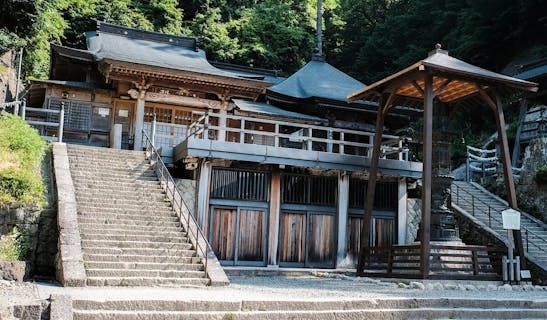
The Lantern Hall with Various Lanterns Offered

Okunoin The Lantern Hall with Various Lanterns Offered
画像引用:るるぶ
The Lantern Hall at Okunoin is known as the main hall of the mausoleum of Kobo Daishi. This hall was built by the second generation of Koyasan, Shinzen Daikoku, and was adjusted to its current size by Fujiwara no Michinaga in 1023, during the Chian era. Inside the Lantern Hall, various lanterns are offered. Of particular note is the "Kishin-to," a lantern used to mourn the parents of the adoptive parent of the monk Kishin. This lantern was offered by the poor Oteru, who cut off her precious black hair to dedicate it along with the lantern. There are also "Shirakawa Lanterns" offered by Emperor Shirakawa. These lanterns are filled with many wishes, and the hall is filled with the sight of lanterns. The solemn atmosphere impresses visitors, not only as a place of faith, but also as a place of peace for many people. The history and sacred atmosphere will surely impress visitors deeply!
Point 4

A Sacred Place of Comfort: The Mausoleum of Kobo Daishi

Okunoin A Sacred Place of Comfort: The Mausoleum of Kobo Daishi
The mausoleum of Kobo Daishi in Okunoin is a place of faith where it is believed that Kobo Daishi, who founded Koyasan, remains in this world in physical form and continues to extend his helping hand to us. This mausoleum is also known as one of Japan's leading power spots and has become a sacred place of Kobo Daishi faith, visited by many worshippers. The existence of the mausoleum is special to those with deep faith, and you may feel the overflowing spiritual energy from the location. Kobo Daishi spread the teachings of Buddhism and was a great figure who gave salvation to many people. Therefore, faith in him is deep, and many people visit for pilgrimage day and night. The mausoleum of Kobo Daishi is a special place for many people because of its history and spirituality, and is an important existence as an object of faith. Visitors seek peace of mind and the fulfillment of their wishes while feeling the power from the location. The mausoleum of Kobo Daishi in Okunoin maintains its presence as a sacred place of comfort for many pilgrims.
Point 5

Experience the Enchanting Atmosphere of the Okunoin Night Tour!

Experience the Enchanting Atmosphere of the Okunoin Night Tour!
At Okunoin, a night tour is held where participants can visit and pay their respects to Kobo Daishi Kukai after dinner until bedtime. The tour is guided by qualified "Kongobuji Temple Grounds Guide" residents of Koyasan. They are knowledgeable guides of Okunoin and explain the history and teachings of Okunoin in an easy-to-understand manner. Even those who have visited Okunoin during the day will experience a different enchanting atmosphere at night. By participating in the night tour, you can enjoy a mystical landscape and atmosphere that is different from the daytime. The Okunoin night tour will be a special experience for participants. Visiting Okunoin at night will provide an opportunity to calm your mind in a tranquil atmosphere and cultivate a deeper faith. By paying respect to Kobo Daishi Kukai in an enchanting space, you will feel even more fulfilled in your heart.
See more

Sightseeing

Okunoin A Special Place of Worship Known as "Japan's Main Bodhi Site"
A Special Place of Worship Known as "Japan's Main Bodhi Site"
Okunoin is a sacred site where Kukai (also known as Kobo Daishi) is said to have achieved enlightenment, and is a central figure in Kukai faith. The path to Okunoin spans about 2 kilometers from Ichinohashi to the mausoleum, with over 200,000 tombstones, memorial towers, and cenotaphs of various daimyo standing amidst beautiful cedar trees. Okunoin is one of the famous pilgrimage sites in Koyasan, and is also known as "Japan's main bodhi site". Many people visit here to pray for the repose of their loved ones and seek peace of mind. The solemn atmosphere and historical value of Okunoin hold a special meaning for visitors. In addition, the surrounding area of Okunoin offers a beautiful natural scenery surrounded by quiet mountains. For visitors, Okunoin is a place to deepen their faith and spend a peaceful and quiet moment. Please come and feel the spiritual energy of Okunoin and experience the peace of mind it brings!

Access

Access from Katsuragi Nishi IC by Car Takes About 40 Minutes!
When using public transportation to access Okunoin in Ito-gun, Wakayama Prefecture, take the Nankai Rinkan Bus bound for Okunoin-mae from Koyasan Cable Koyasan Station. After about 14 minutes on the bus, get off at Ichinohashiguchi Bus Stop and walk for about 40 minutes along the approach. Alternatively, take the same Nankai Rinkan Bus bound for Okunoin-mae and get off at Okunoin-mae Bus Stop after about 21 minutes, then walk for about 20 minutes along the approach. If you are using a car, take National Route 480 via Katsuragi Nishi IC on the Keinawa Expressway, which takes about 27km and approximately 50 minutes. Alternatively, you can access it in about 40 minutes from Kibukatsuragi IC on the Keinawa Expressway.

Basic Information

Address 550 Koyasan, Koya-cho, Ito-gun, Wakayama 648-0294
Business Hours

8時00分~17時00分

TEL 0736-56-2002
Web Site http://www.koyasan.or.jp/tazuneru/sights/okunoin.html
Better Visit Together

Recommended Spots

1200年以上の歴史がある仏教の聖地
金剛峯寺
和歌山県
4.5
History
高野山のシンボルであり聖地!
壇上伽藍
和歌山県
4.5
History
高さ50mの朱色の大塔!
根本大塔
和歌山県
4.5
History

Nearby Hotels

清浄心院
和歌山県
4.7
¥5,000~/person
和歌山県
5
¥11,000~/person
Koyasan Syukubo Kumagaiji
和歌山県
3.5
¥12,000~/person
Koyasan Syukubo Ekoin
和歌山県
4.1
¥13,000~/person
和歌山県
¥8,800~/person
Goshobo Haryoin
和歌山県
4.8
¥5,500~/person
See more

Nearby Activities

【和歌山・手作りアクセサリー】パワースポット・高野山で数珠を作ろう
和歌山県
¥4,500~/人
【和歌山・高野山・ナイトツアー】高野山在住の僧侶や案内人がご案内!夜の奥之院ツアー
和歌山県
¥3,780~/人
ホテルのせ川 電子前売りチケット(入浴券+タオルセット)
和歌山県
¥800~/人
【和歌山・テントサウナ】25mプールで整う!学校でテントサウナ!
和歌山県
¥10,000~/人
【奈良・五條・ラフティング】清流で思いきり遊ぼう!奈良吉野川ラフティングツアー
和歌山県
¥6,600~/人
【奈良・五條・自然体験】吉野川の大自然でととのう体験2時間!テントサウナ体験
和歌山県
¥11,000~/人
See more

Nearby Restaurants

食べログ
はちよう
¥1,000~¥1,999
-
3.3
(Tabelog's review)
食べログ
かさ国 中ノ橋店
~¥999
-
3.3
(Tabelog's review)
食べログ
Shojin Dining 桐宝珠
¥1,000~¥1,999
-
3.3
(Tabelog's review)
食べログ
光海珈琲
¥1,000~¥1,999
-
3.3
(Tabelog's review)
食べログ
上きしや 高野店
~¥999
-
3.2
(Tabelog's review)
食べログ
麩善 かるかや堂前店
~¥999
-
3.4
(Tabelog's review)
Explore the City
高野山・九度山
和歌山県
4.6
アプリアイコン AIでかんたん!旅行プランが作れる
App Storeでダウンロード Google Playでダウンロード
  • Terms of Use
  • Privacy Policy
  • Company Information
AVA Travel's logo
Login
Sign up
  • Hokkaido
  • Aomori
  • Akita
  • Iwate
  • Miyagi
  • Yamagata
  • Fukushima
  • Tochigi
  • Gunma
  • Ibaraki
  • Saitama
  • Kanagawa
  • Chiba
  • Tokyo
  • Yamanashi
  • Niigata
  • Nagano
  • Shizuoka
  • Aichi
  • Gifu
  • Mie
  • Ishikawa
  • Toyama
  • Fukui
  • Hyogo
  • Wakayama
  • Nara
  • Kyoto
  • Shiga
  • Osaka
  • Okayama
  • Hiroshima
  • Yamaguchi
  • Tottori
  • Shimane
  • Ehime
  • Kagawa
  • Kochi
  • Tokushima
  • Oita
  • Nagasaki
  • Fukuoka
  • Kumamoto
  • Miyazaki
  • Saga
  • Kagoshima
  • Okinawa
  • Sapporo
  • Otaru, Yoichi, & Niseko
  • Hakodate
  • Hirosaki
  • Towada & Okuinse
  • Aomori City Area
  • Tsugaru
  • Morioka
  • Miyagi Zao & Shiroishi
  • Sendai
  • Yamagata, Zao, & Tendo
  • Aizu & Kitakata
  • Utsunomiya
  • Nasu & Shiobara
  • Nikko & Kinugawa
  • Takasaki & Maebashi
  • Shibukawa & Ikaho
  • Kusatsu & Shiga Kogen
  • Oze & Numata
  • Tomioka & Shimonita
  • Kawagoe & Higashimatsuyama
  • Omiya, Urawa, & Kounosu
  • Chichibu & Nagatoro
  • Yokohama
  • Kamakura
  • Motomachi & Chinatown
  • Enoshima & Shonan
  • Hakone
  • Tateyama & Minamiboso
  • Kujukuri
  • Chiba, Urayasu, & Makuhari
  • Kisarazu & Kimitsu
  • Izu Islands & Ogasawara
  • Shibuya, Harajuku, & Omotesando
  • Shinjuku
  • Asakusa & Skytree
  • Lake Kawaguchi & Fujiyoshida
  • Yuzawa, Tsunan, & Tokamachi
  • Nagaoka, Sanjo, & Kashiwazaki
  • Karuizawa
  • Matsumoto, Kamikochi & Shiojiri
  • Nozawa Onsen & Shiga Kogen
  • Izu
  • Gotemba, Fuji & Fujinomiya
  • Atami
  • Nagoya
  • Gero (Gero Onsen)
  • Hida, Takayama, & Shirakawa-go
  • Ise, Shima, and Toba
  • Kanazawa
  • Kobe & Arima (Arima Onsen)
  • Awaji Island
  • Himeji & Ako
  • Nara, Tenri, & Horyuji
  • Uji
  • Gion & Higashiyama
  • Kyoto Station & Kawaramachi
  • Fushimi & Yamashina
  • Arashiyama & Takao
  • Nagahama & Maibara
  • Hikone & Omihachiman
  • Shinsaibashi, Namba, & Tennoji
  • Osaka Bay Area
  • Okayama, Ushimado, & Bizen
  • Kurashiki
  • Himeji
  • Miyajima & Hiroshima City
  • Takehara & Mihara
  • Onomichi
  • Shimonoseki & Sumijima
  • Izumo & Iwami Ginzan
  • Uwajima & Ozu
  • Imabari
  • Matsuyama & Dogo
  • Niihama, Saijo, & Mount Ishizuchi
  • Shimanami
  • Shimanto & Ashizuri
  • Oboke, Ohboke, & Iya Valley
  • Naruto & Tokushima City Area
  • Oita City, Saiki, & Usuki
  • Yufuin
  • Beppu
  • Iki, Tsushima & Goto Islands
  • Itoshima
  • Hakata, Tenjin & Dazaifu
  • Kitakyushu, Moji & Kokura
  • Aso & Kurokawa (Kurokawa Onsen)
  • Kumamoto, Yamaga & Kikuchi
  • Miyazaki, Miyakonojo, & Nichinan
  • Takachiho, Nobeoka, & Hyuga
  • Amami & Yoron
  • Yakushima
  • Ibusuki, Chiran & Makurazaki
  • Kagoshima, Sakurajima & Kirishima
  • Onna Village & Central Okinawa
  • Kumejima & Kerama
  • Miyakojima
  • Iriomote Island, Taketomi Island, & Kohama Island
  • Ishigaki Island
  • Naha & Southern Okinawa
  • Utoro Onsen
  • Tokachigawa Onsen
  • Jozankei Onsen
  • Toyako Onsen
  • Noboribetsu Onsen
  • Yukawa Onsen
  • Sukayu Onsen
  • Nyuto Onsen
  • Higashiyama Onsen
  • Shiobara Onsen
  • Kinugawa Onsen
  • Nikko Onsen
  • Yugawara Onsen
  • Hakoneyumoto Onsen
  • Owakudani Onsen
  • Gero Onsen
  • Nibukawa Onsen
  • Ureshino Onsen
  • Yufuin Onsen
  • Beppu Onsen
  • Kurokawa Onsen
  • Jigoku Onsen
  • Ibusuki Onsen

Copyright (c) AVA Intelligence Inc. All Rights Reserved.