AVA Travelのロゴ
日本語
日本語
English
中文繁體
TOPページスポット一覧九州福岡県博多・天神・太宰府Dazaifu Tenmangu Shrine
TOP
1/3
すべての写真

Dazaifu Tenmangu Shrine

福岡県
4.4
このエリアの観光情報
general.prefecture.
The land associated with the god of learning, with connections to the Reiwa era.
This is a Tenmangu shrine that enshrines Sugawara no Michizane, who is known as the god of learning. It is said that every year, students from all over the country visit here to pray for success in their exams. Along the way from the station to Dazaifu Tenmangu Shrine, there are gourmet food and souvenirs, so you can enjoy yourself on the way.

特徴・楽しみ方

定番 歴史

見どころ

ポイント 1

Experience the History and Legends of Dazaifu Tenmangu Shrine

Experience the History and Legends of Dazaifu Tenmangu Shrine
画像引用:太宰府天満宮
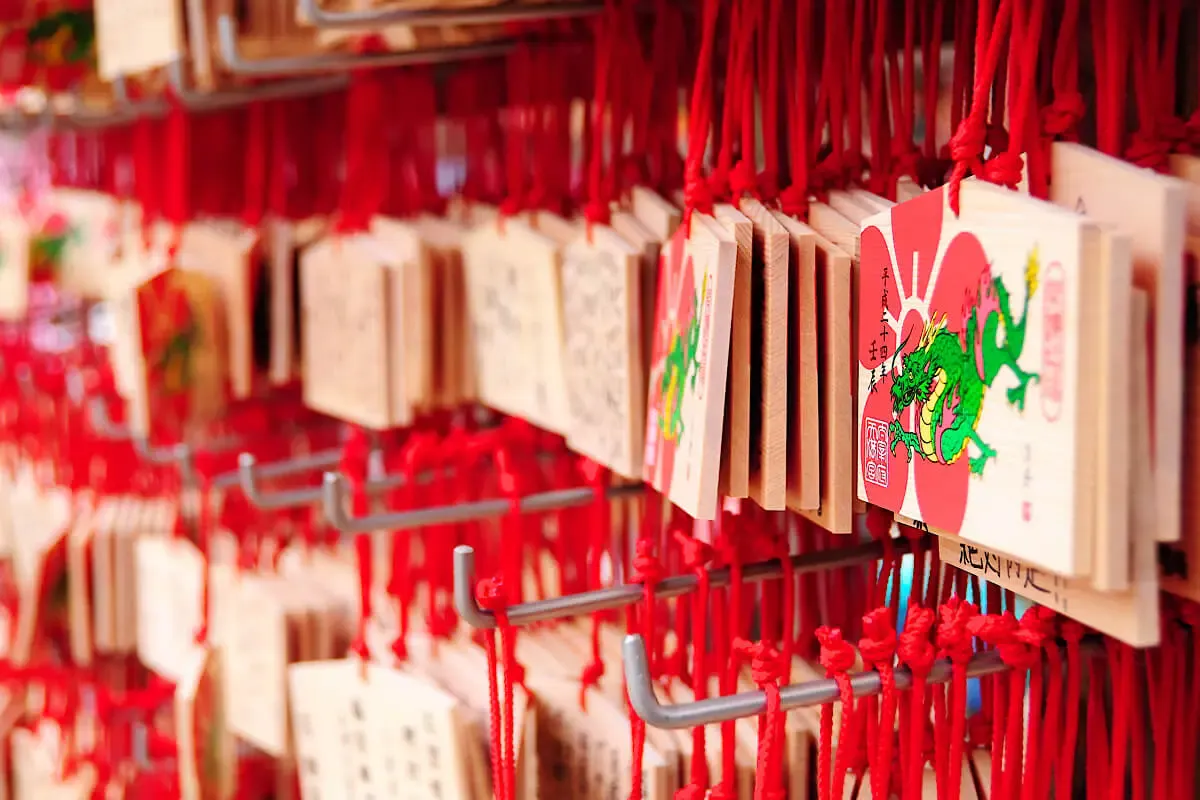
Sugawara no Michizane, the enshrined deity of Dazaifu Tenmangu Shrine, is known as a scholar and politician of the Heian period. He rose to a high position with his outstanding knowledge and political skills, serving as a doctor of literature and minister of the left. However, due to his conflict with the ruling power of the time, he was exiled to Dazaifu in Kyushu. After his death there, various legends were passed down about him. One of the most famous is the story that Michizane had a deep love for plum blossoms. When he left the capital, he composed a farewell poem to his beloved plum tree, and his admiration for plum blossoms was known to the people of Dazaifu. After his death, there is a legend that the plum tree he loved flew from the capital to Dazaifu, known as the "flying plum tree legend". In honor of this legend, many plum trees are planted at Dazaifu Tenmangu Shrine, and the plum blossoms in spring are particularly beautiful. Michizane is also widely revered as the god of learning. He devoted himself to learning during his lifetime and raised many disciples. Therefore, his spirit came to be revered as the god of learning by the people. At Dazaifu Tenmangu Shrine, students and those aspiring to academic achievement visit to pray for success in exams and academic achievement. Dazaifu Tenmangu Shrine is not only a place where you can touch the history and legends of Michizane, but also a place where you can experience beautiful nature and culture. Please come and experience its charm for yourself!
ポイント 2

Experience the Unique Atmosphere of the Main Shrine

Dazaifu Tenmangu Shrine Experience the Unique Atmosphere of the Main Shrine
画像引用:太宰府天満宮
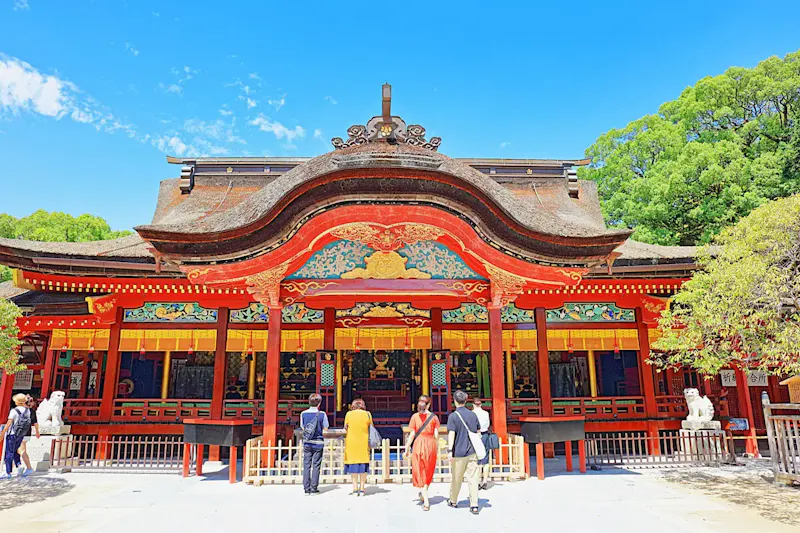
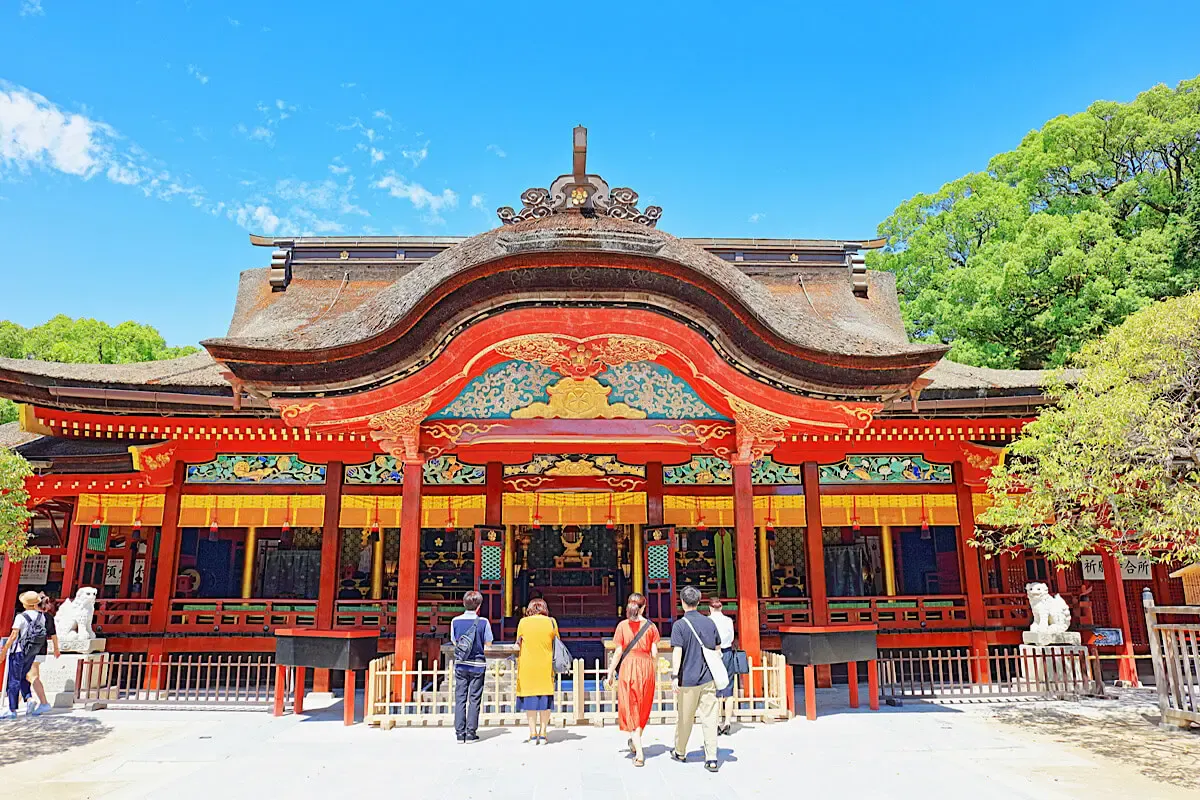
The main shrine of Dazaifu Tenmangu Shrine is located at the center of the shrine and enshrines Sugawara no Michizane, the deity of the shrine. The main shrine is built in the unique architectural style of "Hachiman-zukuri," which is typical of the Kyushu region, and its beautiful appearance fascinates visitors. Hachiman-zukuri usually consists of a main hall with a flat entrance and a worship hall with a raised floor, and its characteristic is that the main hall and the worship hall are integrated. In addition, the roof has a unique shape with a double gable roof. The construction of the main shrine dates back to the Heian period, but it has been destroyed by fire many times and rebuilt each time. The current main shrine was donated by Toyotomi Hideyoshi in 1591 and is designated as an important cultural property of the country. The stone walls around the main shrine are also designated as a national historic site. In front of the main shrine, there is a worship hall where visitors can offer prayers. Behind the main shrine, there is a shrine office where the priests serve. The surrounding area of the main shrine is rich in nature, such as plum and cedar trees, and you can feel the beauty of the four seasons. The main shrine of Dazaifu Tenmangu Shrine is not only a place where you can feel the history and tradition, but also a sacred space surrounded by beautiful architectural style and nature that heals your heart. When you visit the main shrine, be sure to experience its dignified appearance and serene atmosphere.
ポイント 3

Observing the Famous Plum Tree from a Legend

Dazaifu Tenmangu Shrine Observing the Famous Plum Tree from a Legend
画像引用:太宰府天満宮
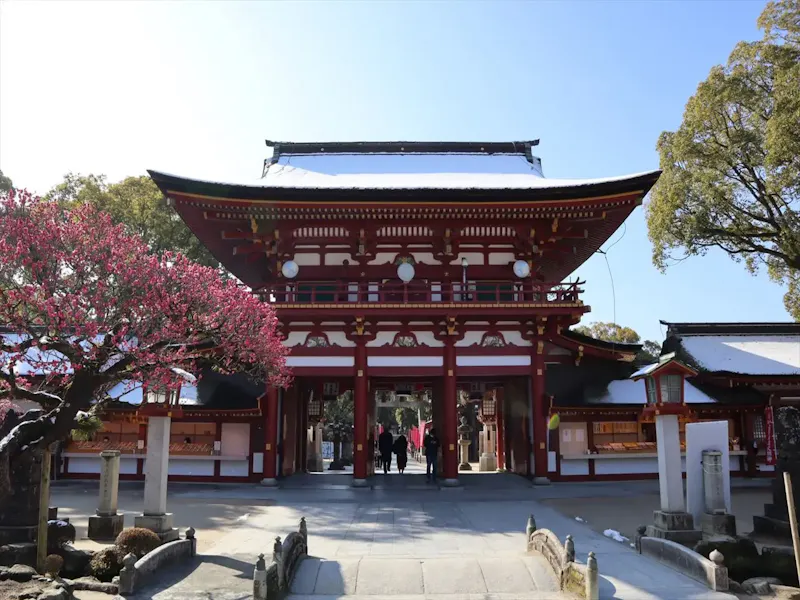
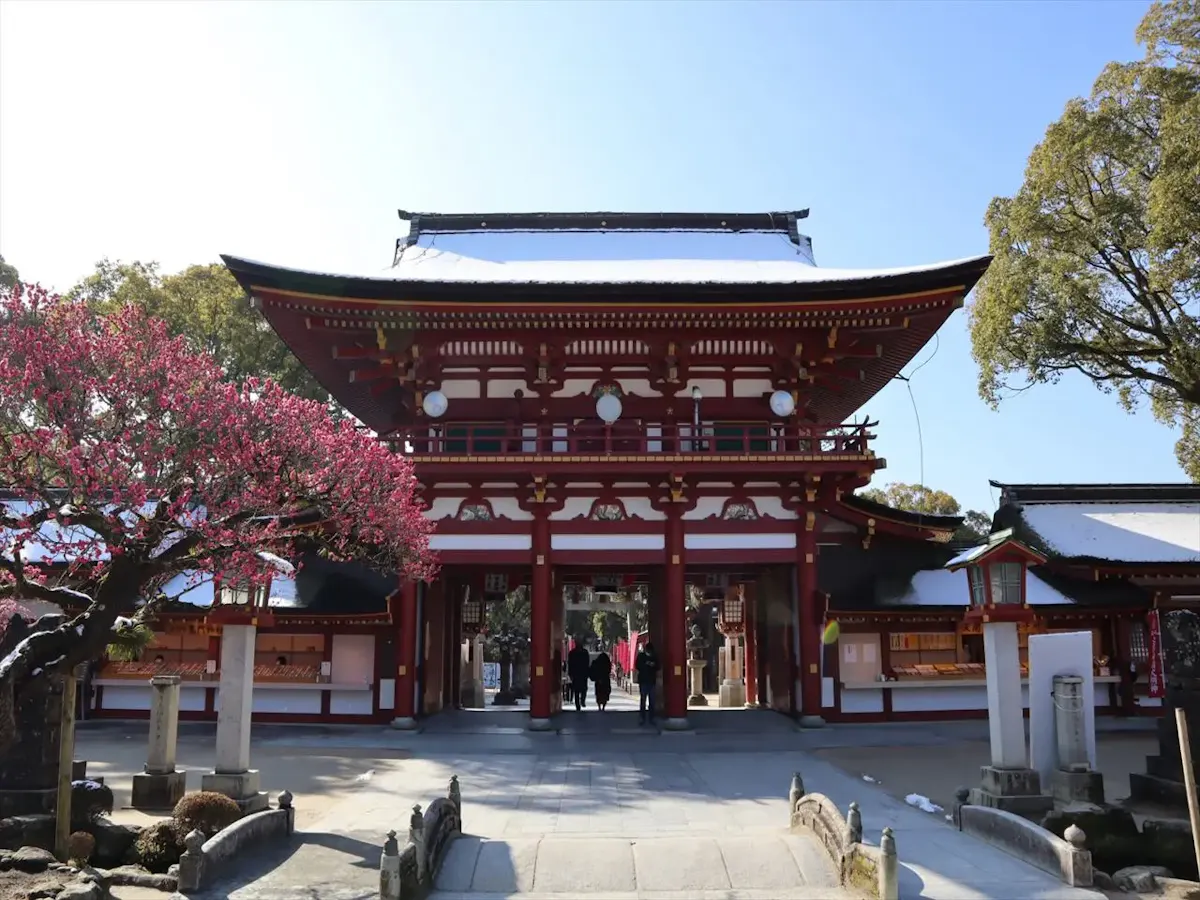
At Dazaifu Tenmangu Shrine, there are numerous plum trees, but the most famous is the "Flying Plum". The Flying Plum is located right next to the main shrine and has been deeply connected to Sugawara no Michizane for a long time. This plum tree not only blooms beautiful flowers, but also has an inspiring story. According to legend, when Sugawara no Michizane was exiled from Kyoto to Dazaifu, he composed a poem for his beloved plum tree, expressing his wish to "welcome spring together with you again someday, even if we are far apart". After Michizane arrived in Dazaifu, it is said that the plum tree flew from Kyoto to Dazaifu in response to his feelings. Even now, the Flying Plum blooms beautifully next to Michizane's main shrine in Dazaifu Tenmangu Shrine. In spring, many people visit to admire the beauty of the Flying Plum's flowers and are captivated by its beauty. The Flying Plum is a symbol that conveys the importance of loyalty and affection to people, and it colors the scenery of Dazaifu Tenmangu Shrine. When visiting the Flying Plum, please enjoy the beauty of the flowers while imagining the deep bond between Sugawara no Michizane and the plum tree, as well as its inspiring story.
ポイント 4

Find Peace of Mind through Art Appreciation

Dazaifu Tenmangu Shrine Find Peace of Mind through Art Appreciation
画像引用:太宰府天満宮
Dazaifu Tenmangu Shrine has not only historical and cultural attractions, but also wonderful artistic features. Various art works are displayed on the shrine grounds, allowing visitors to enjoy art appreciation and find peace of mind. There is a historical painting called "Tenjin Engi" on the grounds. It was painted in the Heian period and depicts the life of Sugawara no Michizane. The scroll tells the story of Michizane's birth, his exile to Dazaifu, and how he became the god of learning. This valuable scroll is currently on display at the Dazaifu Tenmangu Shrine Treasure Hall. In addition, there are various sculptures on the grounds. Among them, the wooden carving "Oniishi" is a popular piece among visitors. Oniishi is a stone said to have been thrown by Michizane when he died, and is believed to cut off bad relationships. Dazaifu Tenmangu Shrine also actively engages in contemporary art. Regular exhibitions of contemporary art are held on the grounds, and many artists donate their works. These works serve as a bridge connecting cultures from ancient to modern times, bringing out the new charm of Dazaifu Tenmangu Shrine! Dazaifu Tenmangu Shrine provides a space for enriching the mind through art. Visitors can appreciate beautiful art works in a sacred space and feel peace of mind. When you visit Dazaifu Tenmangu Shrine, be sure to take a look at the art works and feel their charm!
ポイント 5

Enjoy Festivals Held Throughout the Year

Dazaifu Tenmangu Shrine Enjoy Festivals Held Throughout the Year
画像引用:太宰府天満宮
At Dazaifu Tenmangu Shrine, numerous attractive festivals are held throughout the year, allowing visitors to experience the history, culture, and charm of the region. The "Jingu Kogo Go-sai-shin Kourin-sai" held to welcome the new year includes prayers that recall the deep connection with the imperial family. In the "O-harae-shiki" held every six months, sins and impurities accumulated over the past half year are purified, preparing for the new season. The "Nijyugo-nichi-sai" held on the 25th of every month is a festival that mourns the death anniversary of Sugawara no Michizane and praises his achievements. The "Tanabata Matsuri" is a summer tradition where visitors write their wishes on strips of paper hung on the shrine grounds. The "Shuki Reitaisai" is a festival held in autumn that includes various events and traditional ceremonies to express gratitude to Sugawara no Michizane. At the "Kyokusui no En," a recreation of a Heian period event, visitors can enjoy a refined atmosphere and feel the romance of history. The "Tenka-in Rajo-mon Matsuri" is a special day when valuable treasures are open to the public, allowing visitors to experience their historical value. At the end of the year, the "Yakuyoke Taisai" is held to prepare for the new year while praying for good fortune. The festivals at Dazaifu Tenmangu Shrine are a valuable opportunity to enjoy traditional events and customs in a sacred space. Through these diverse festivals, you can experience the history, culture, and charm of Japan and the region. Please visit Dazaifu Tenmangu Shrine and experience its charm for yourself!
もっとみる

Access

Dazaifu Tenmangu Shrine Travel Comfortably on a Convenient Direct Bus
Travel Comfortably on a Convenient Direct Bus
For access to Dazaifu Tenmangu Shrine, we recommend taking an unreserved bus that goes directly from Hakata Bus Terminal to Nishitetsu Dazaifu Line "Dazaifu Station" via Fukuoka Airport International Terminal. It takes about 40 minutes from Hakata Bus Terminal and about 25 minutes from Fukuoka Airport International Terminal to get to Nishitetsu Dazaifu Line "Dazaifu Station". If you use other public transportation, you can also take the Nishitetsu Tenjin Omuta Line. From Nishitetsu Tenjin Omuta Line "Fukuoka (Tenjin) Station", transfer to Nishitetsu Dazaifu Line at Nishitetsu Futamata Station and arrive at "Dazaifu Station" in about 30 to 35 minutes. Additionally, there are several parking lots around Dazaifu Tenmangu Shrine, so it may be a good idea to consider visiting by car!

Parking

Using a Convenient Parking Lot Nearby
On the website of Dazaifu Tenmangu Shrine, two parking lots are introduced. The first is the "Dazaifu Parking Center". It's a large parking lot that can accommodate microbuses and is about a 10-minute walk from Dazaifu Tenmangu Shrine. The operating hours are from 8:00 to 17:00, and the parking fee is 500 yen for regular cars and 250 yen for motorcycles, with no additional fees for the passage of time. The second is the "Dazaifu Parking". It's a parking lot located about a 5-minute walk from the west gate of Dazaifu Tenmangu Shrine along Prefectural Route 35, and only regular cars can park here. However, the number of vehicles that can be accommodated is not very large, so it's a smaller parking lot compared to the "Dazaifu Parking Center". The operating hours are from 8:00 to 17:00, and the parking fee is 400 yen for the first hour of entry, and then an additional fee of 100 yen for every 30 minutes thereafter, with no maximum fee set. Therefore, if you plan to take your time visiting or eating, it's recommended to use the "Dazaifu Parking Center"!

基本情報

住所 4-7-1 Saifu, Dazaifu-shi, Fukuoka 818-0117
営業時間

Open from 6:30am to 6:30pm on Monday through Sunday.

TEL 092-922-8225
Webサイト http://www.dazaifutenmangu.or.jp/
一緒に回りたい

おすすめスポット

境内で貴重な文化財を展示している博物館
太宰府天満宮 宝物殿
福岡県
4
雨の日文化
モダンなガラス張り建築が有名
九州国立博物館
福岡県
4.2
雨の日文化
紅葉のライトアップは圧巻です
宝満宮 竈門神社
福岡県
4.4
紅葉花見歴史
有名な梅ヶ枝餅を味わえます
食べログ
お食事処 かさの家
3.6
(食べログの評価)
歴史好き必見の観光スポット
大宰府学校院跡
福岡県
3.9
歴史

周辺のホテル

Hotel Cultia Dazaifu
福岡県
4.4
¥26,170~/人
SONIC Apartment Hotel
福岡県
3.9
¥4,060~/人
Route-Inn Grantia Dazaifu
福岡県
3.6
¥6,550~/人
AO-Dazaifu
福岡県
3.8
¥1,600~/人
福岡県
4.1
¥3,850~/人
Futsukaichi Green Hotel
福岡県
2.9
¥4,000~/人
もっとみる

周辺の体験

【福岡・太宰府・ガイドツアー】名所やパワースポットをめぐろう!太宰府ウォーク
福岡県
¥3,000~/人
【福岡・太宰府・ガイドツアー】お得な、小・中学生グループプラン!太宰府を歩きながら歴史を学ぼう
福岡県
¥5,000~/人
九州国立博物館 電子前売り観覧チケット(平常展)※特別展のチケットはご購入できません。
福岡県
¥700~/人
【 福岡市郊外・手びねり】アソビュー!限定プラン!手びねりでコップや茶碗を作ろう
福岡県
¥1,650~/人
【福岡市郊外】少人数制・アットホームな工房で、好きなものを作れる陶芸体験
福岡県
¥3,650~/人
【最大540円割引】筑紫の湯 さらに!お得なセット券(入浴料+選べるお食事)
福岡県
¥1,790~/人
もっとみる

周辺の飲食店

食べログ
寿庵 寺田屋
~¥999
-
3.5
(食べログの評価)
食べログ
お石茶屋
~¥999
-
3.5
(食べログの評価)
食べログ
茶房きくち
~¥999
-
3.6
(食べログの評価)
食べログ
お食事処 かさの家
~¥999
-
3.6
(食べログの評価)
食べログ
茶房 ぎゃらりー かさの家
~¥999
-
3.6
(食べログの評価)
食べログ
やす武
~¥999
-
3.6
(食べログの評価)
このスポットの周辺情報
博多・天神・太宰府
福岡県
4.4
アプリアイコン AIでかんたん!旅行プランが作れる
App Storeでダウンロード Google Playでダウンロード
  • 利用規約
  • プライバシーポリシー
  • 会社情報
AVA Travelのロゴ
ログイン
会員登録
  • 北海道
  • 青森県
  • 秋田県
  • 岩手県
  • 宮城県
  • 山形県
  • 福島県
  • 栃木県
  • 群馬県
  • 茨城県
  • 埼玉県
  • 神奈川県
  • 千葉県
  • 東京都
  • 山梨県
  • 新潟県
  • 長野県
  • 静岡県
  • 愛知県
  • 岐阜県
  • 三重県
  • 石川県
  • 富山県
  • 福井県
  • 兵庫県
  • 和歌山県
  • 奈良県
  • 京都府
  • 滋賀県
  • 大阪府
  • 岡山県
  • 広島県
  • 山口県
  • 鳥取県
  • 島根県
  • 愛媛県
  • 香川県
  • 高知県
  • 徳島県
  • 大分県
  • 長崎県
  • 福岡県
  • 熊本県
  • 宮崎県
  • 佐賀県
  • 鹿児島県
  • 沖縄県
  • 札幌
  • 小樽・余市・ニセコ
  • 函館
  • 弘前
  • 十和田・奥入瀬
  • 青森市周辺
  • 津軽
  • 盛岡
  • 宮城蔵王・白石
  • 仙台
  • 山形・蔵王・天童
  • 会津・喜多方
  • 宇都宮
  • 那須・塩原
  • 日光・鬼怒川
  • 高崎・前橋
  • 渋川・伊香保
  • 草津・志賀高原
  • 尾瀬・沼田
  • 富岡・下仁田
  • 川越・東松山
  • 大宮・浦和・鴻巣
  • 秩父・長瀞
  • 横浜
  • 鎌倉
  • 元町・中華街
  • 江ノ島・湘南
  • 箱根
  • 館山・南房総
  • 九十九里
  • 千葉・浦安・幕張
  • 木更津・君津
  • 伊豆七島・小笠原
  • 渋谷・原宿・表参道
  • 新宿
  • 浅草・スカイツリー
  • 河口湖・富士吉田
  • 湯沢・津南・十日町
  • 長岡・三条・柏崎
  • 軽井沢
  • 松本・上高地・塩尻
  • 野沢温泉・志賀高原
  • 伊豆
  • 御殿場・富士・富士宮
  • 熱海
  • 名古屋
  • 下呂(下呂温泉)
  • 飛騨・高山・白川郷
  • 伊勢・志摩・鳥羽
  • 金沢
  • 神戸・有馬(有馬温泉)
  • 淡路島
  • 姫路・赤穂
  • 奈良・天理・法隆寺
  • 宇治
  • 祇園・東山
  • 京都駅・河原町
  • 伏見・山科
  • 嵐山・高雄
  • 長浜・米原
  • 彦根・近江八幡
  • 心斎橋・難波・天王寺
  • 大阪ベイエリア
  • 岡山・牛窓・備前
  • 倉敷
  • 蒜山・湯原温泉
  • 宮島・広島市
  • 竹原・三原
  • 尾道
  • 下関・角島
  • 出雲・石見銀山
  • 宇和島・大洲
  • 今治
  • 松山・道後
  • 新居浜・西条・石鎚山
  • しまなみ
  • 四万十・足摺
  • 大歩危・小歩危・祖谷渓
  • 鳴門・徳島市周辺
  • 大分市・佐伯・臼杵
  • 湯布院
  • 別府
  • 壱岐・対馬・五島列島
  • 糸島
  • 博多・天神・太宰府
  • 北九州・門司・小倉
  • 阿蘇・黒川(黒川温泉)
  • 熊本・山鹿・菊池
  • 宮崎・都城・日南
  • 高千穂・延岡・日向
  • 奄美・与論
  • 屋久島
  • 指宿・知覧・枕崎
  • 鹿児島・桜島・霧島
  • 恩納村・沖縄中部
  • 久米島・慶良間
  • 宮古島
  • 西表島・竹富島・小浜島
  • 石垣島
  • 那覇・沖縄南部
  • ウトロ温泉
  • 十勝川温泉
  • 定山渓温泉
  • 洞爺湖温泉
  • 登別温泉
  • 湯川温泉
  • 酸ヶ湯温泉
  • 乳頭温泉
  • 東山温泉
  • 塩原温泉
  • 鬼怒川温泉
  • 日光温泉
  • 湯河原温泉
  • 箱根湯本温泉
  • 大涌谷温泉
  • 下呂温泉
  • 鈍川温泉
  • 嬉野温泉
  • 湯布院温泉
  • 別府温泉
  • 黒川温泉
  • 地獄温泉
  • 指宿温泉

Copyright (c) AVA Intelligence Inc. All Rights Reserved.